Introduction
Swimming pools, underground water tanks, sumps, and retaining walls require carefully planned concrete formwork. These structures are exposed to moisture during construction and may need a smooth concrete finish to meet project requirements.
Traditional plywood formwork can swell, delaminate, or deteriorate after repeated exposure to moisture, depending on its quality and handling. This may increase maintenance requirements and reduce the number of times a sheet can be reused.
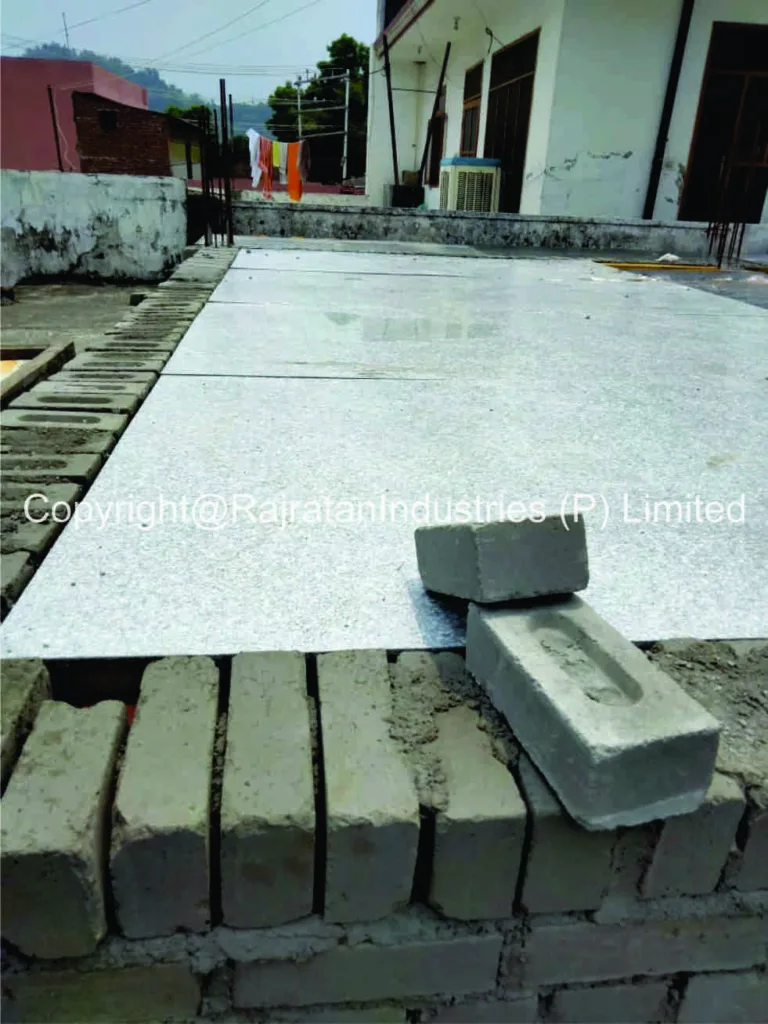
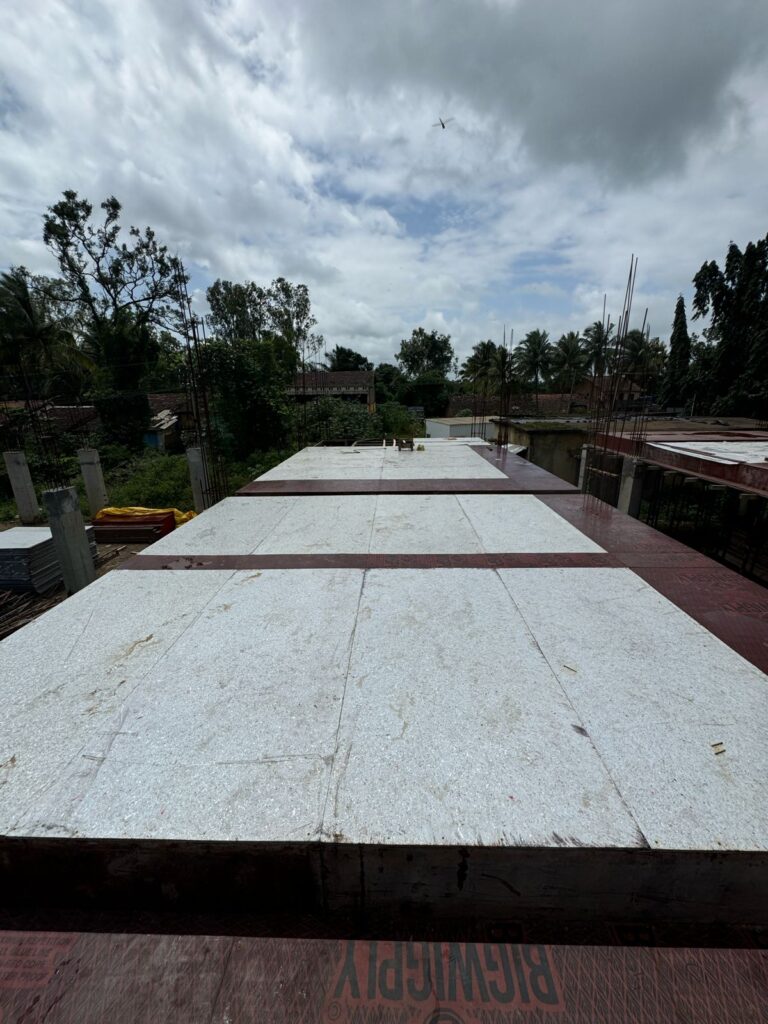
PAC® Plastic Shuttering Boards from Rajratan Industries Private Limited are composite formwork panels designed for suitable concrete construction applications. Their material formulation offers an alternative to conventional wood-based shuttering boards.
In this guide, we explain the role of plastic shuttering boards in underground construction, product options, installation considerations, and how to evaluate the long-term cost of formwork materials.
Why Does Moisture Matter in Underground Formwork?
Underground structures are often constructed in environments where soil moisture, groundwater, and wet concrete are important considerations.
The formwork material must retain its required shape and provide adequate support until the concrete can safely sustain the loads placed on it.
Common Challenges with Traditional Plywood
- Swelling and delamination: Repeated moisture exposure can affect plywood layers and edges.
- Surface irregularities: Damaged or warped sheets may leave unwanted marks on the concrete surface.
- Frequent replacement: Sheets that deteriorate quickly may need to be replaced more often.
- Cleaning and maintenance: Repeated use can require additional preparation between concrete pours.
These issues vary according to plywood quality, coating, storage, site conditions, and handling practices.
A suitable composite formwork board can help address some of these material-related challenges. However, the complete formwork system—including supports, joints, ties, and bracing—must still be designed for the expected concrete pressure.
What Is a PAC® Plastic Shuttering Board?
PAC® stands for Plastic Aluminium Composite. Rajratan PAC® Shuttering Boards are composite panels manufactured using a specified formulation of industrial plastics and reinforcing materials.
They are designed for suitable concrete formwork applications where repeated use, moisture exposure, and surface finish are important considerations.
Key Product Options
Rajratan offers PAC® Shuttering Board variants for different application requirements.
Specification | ECOPRIME Standard | ECOPRIME Premium | Heavy-Duty Board |
Typical application | General formwork applications | Applications requiring higher reuse potential | Applications requiring suitable heavy-duty specifications |
Indicative repetitions | 30–40 uses | 60–100+ uses, subject to conditions | Confirm with supplier |
Density | 1,100 kg/m³ | 1,320 kg/m³ | 1,320 kg/m³, according to supplied specifications |
Available thicknesses | Confirm current range | Confirm current range | 18 mm option specified in supplied draft |
Indicative price in supplied draft | ₹80/sq. ft. | ₹90/sq. ft. | ₹125/sq. ft. |
Repetition figures and prices are based on the supplied product information and should be confirmed before publication or purchase. Actual reuse depends on handling, support spacing, release agent, cleaning, and site conditions.
The standard sheet size mentioned in the supplied information is approximately 8 ft × 4 ft (2440 mm × 1220 mm). Custom dimensions may be available on request.
How to Plan Formwork for Underground Tanks and Swimming Pools
Using plastic shuttering boards for water-retaining structures requires proper planning. The board itself does not replace structural design, waterproofing details, or an engineered formwork support system.
Step 1: Prepare the Base and Work Area
Remove loose material and standing water as required by the construction plan. Prepare the foundation and any plain cement concrete (PCC) bed according to the approved drawings and site specifications.
Check the base levels and dimensions before installing the formwork.
Step 2: Measure and Cut the Boards
Measure the required wall heights, dimensions, and openings before cutting the sheets.
PAC® boards may be cut using suitable equipment and a blade recommended by the manufacturer. Follow the relevant cutting instructions, use appropriate personal protective equipment, and control dust and debris.
Confirm that the finished dimensions fit the planned formwork layout.
Step 3: Install Supports and Bracing
Fix the boards to a suitable support system using the specified fasteners and connection details.
The spacing of timber runners, steel battens, ties, and other supports must be determined from the board specifications, concrete placement rate, wall height, and expected fresh-concrete pressure.
Do not use a generic batten spacing for every tank or pool. Support spacing should be confirmed by the formwork designer or a qualified engineer before pouring concrete.
Step 4: Seal Board Joints
Align adjacent sheets and use a compatible joint-sealing method where required to control cement slurry leakage.
The joint treatment should be appropriate for the panel material and the concrete finish being targeted. Inspect the complete formwork assembly before pouring.
Important: Sealed formwork joints do not, by themselves, make the completed tank or swimming pool waterproof. Structural concrete design, construction joints, waterstops, crack control, and any specified waterproofing system remain essential.
Step 5: Install Tie Rods and Wall Ties
Where tie rods are required, install them according to the approved formwork design.
For water-retaining structures, the tie arrangement and any required waterstop details must follow the project’s engineering specifications. Tie holes and penetrations should be addressed in accordance with the approved waterproofing and concrete construction details.
Step 6: Apply a Suitable Release Agent
Use a release agent recommended for the selected board and the intended concrete finish.
Apply it according to the manufacturer’s instructions. Excessive or incompatible release agents may affect the concrete surface or subsequent finishing work.
Step 7: Inspect Before Pouring
Before placing concrete, verify that:
- The formwork dimensions and levels are correct.
- Supports, braces, ties, and connections are secure.
- Joints and openings have been checked.
- The formwork can withstand the specified concrete placement pressure.
- The site team has an approved pouring and monitoring plan.
Concrete placement should proceed according to the approved method statement, with appropriate inspection throughout the pour.
Why Consider PAC® Boards for Repeated Formwork Use?
For contractors, the value of a shuttering board depends on more than its purchase price. The number of usable repetitions, maintenance requirements, handling, surface finish, and replacement frequency all influence overall project costs.
PAC® Shuttering Boards may be considered where contractors want an alternative to conventional plywood and where the selected board’s specifications suit the formwork design.
Potential evaluation factors include:
- Moisture performance: Confirm the board’s water-resistance specifications.
- Surface finish: Assess the concrete finish achieved in a trial application.
- Reuse potential: Compare actual repetitions under your site’s working conditions.
- Cleaning and maintenance: Evaluate how easily the board can be prepared for subsequent pours.
- Handling and installation: Consider sheet dimensions, weight, fastening methods, and site equipment.
- Compatibility: Confirm that the board is suitable for the planned supports and fresh-concrete pressure.
No shuttering board should be assumed to be suitable for every wall height or concrete pour without checking its technical limits.
Cost Analysis: Plywood vs. PAC® Plastic Shuttering Boards
The cost per use is a useful way to compare formwork materials.
A board with a higher purchase price may provide value if it achieves more successful repetitions. However, the comparison should use actual purchase prices and realistic reuse figures for the specific project.
Illustrative Cost per Use
The following calculation uses the prices and reuse assumptions from the supplied draft.
Material | Example Purchase Price | Assumed Repetitions | Material Cost per Use |
Plywood | ₹50/sq. ft. | 5 uses | ₹10.00/sq. ft. |
PAC® Premium Board | ₹90/sq. ft. | 60 uses | ₹1.50/sq. ft. |
The calculation is:
Cost per use = Purchase price per square foot ÷ Number of usable repetitions
This is a simplified material-cost comparison. It excludes labour, transport, support systems, cleaning, repair, disposal, and other project costs. The actual result depends on the number of successful repetitions achieved on site.
Understanding the 40% Buyback Programme
Rajratan offers a 40% buyback replacement programme for eligible products, subject to the applicable terms and conditions.
Before including a buyback credit in your cost calculation, confirm whether the credit is calculated on the original purchase value, scrap value, or another agreed basis.
Only include the confirmed credit in your financial comparison. This helps ensure that the projected cost per use reflects the actual commercial terms.
For product details, visit the official Rajratan PAC® Shuttering Board website.
Site Handling, Cutting, Cleaning, and Storage
Correct handling can help maintain the condition of reusable formwork boards.
Cutting and Fastening
Use tools and fastening methods recommended for the board material. Confirm the appropriate nail, screw, drill, and cutting specifications with the manufacturer before use.
Avoid placing fasteners where they may compromise panel integrity or conflict with the formwork design.
Cleaning After Striking
Remove residual concrete using a method suitable for the board surface. Follow the manufacturer’s cleaning recommendations and avoid aggressive tools or chemicals that may damage the panel.
Storage Between Uses
Store boards flat on suitable, level supports and protect them from conditions that may cause physical damage. Inspect the sheets before each reuse and remove damaged boards from service when they no longer meet the required specifications.
Trial Testing
Where available, test a small batch of boards on a suitable project before placing a large order. Evaluate handling, cutting, cleaning, surface finish, and the number of successful repetitions.
Ordering and Delivery from Rajratan
Rajratan Industries Private Limited supplies PAC® Shuttering Boards for construction applications. Contractors should confirm current availability, dimensions, technical specifications, and commercial terms before placing an order.
Trial Orders
Ask whether a small trial order is available for your project. A trial can help assess how the boards work with the intended formwork system.
Payment Terms
The supplied draft describes a commercial arrangement of 30% advance payment and 70% balance before dispatch. Confirm the current terms in the written quotation.
Shipping and Logistics
Delivery timelines and freight charges depend on order quantity, destination, production schedules, and transport availability. Confirm whether the shipment will be delivered to the site or to a transporter’s godown.
Custom Dimensions
Share your required board dimensions, thickness, project type, and expected application with the sales team. The supplier can confirm available sizes and whether the requested specification is suitable.
Frequently Asked Questions
1. Are PAC® Shuttering Boards suitable for underground water tanks?
They may be suitable for formwork applications in underground tanks, subject to the board’s technical specifications and the project’s formwork design. Support spacing, concrete pressure, joints, and water-retaining structure details must be properly engineered.
2. Are plastic shuttering boards waterproof?
PAC® boards are designed for applications where moisture resistance is important. Confirm the water-resistance data for the specific product. Board water resistance alone does not guarantee a waterproof finished tank or swimming pool.
3. How many times can PAC® Shuttering Boards be reused?
The supplied product information lists approximately 30–40 repetitions for ECOPRIME Standard and 60–100+ for ECOPRIME Premium. Actual reuse depends on installation, handling, cleaning, release-agent use, and project conditions.
4. Can PAC® boards be cut and drilled on site?
Cutting and drilling may be possible with suitable tools and methods. Follow the manufacturer’s guidance for blade selection, fastening, drilling, and safe handling.
5. How does the 40% buyback programme work?
Eligible products may qualify for a 40% buyback replacement credit under the applicable terms. Confirm the calculation basis, eligibility, and return process directly with Rajratan.
6. Do plastic shuttering boards eliminate the need for waterproofing?
No. Formwork boards are temporary construction components. The waterproof performance of a completed tank or pool depends on structural design, concrete quality, joint details, crack control, penetrations, and any specified waterproofing system.
Contact Rajratan for PAC® Shuttering Board Solutions
Choosing the right formwork material can help contractors manage reuse, handling, and surface-finish requirements. For underground tanks and swimming pools, the board must always be selected as part of a properly designed formwork system.
Contact Rajratan to discuss available PAC® Shuttering Board grades, sheet dimensions, technical specifications, and project requirements.
Company: Rajratan Industries Private Limited
Website: https://shutteringboard.rajratan.in/
Phone: +91 9685727927
Email: info@rajratan.in
Address: 123–124, First Floor, Shastri Market, Opp. Gandhi Hall, Indore – 452007, Madhya Pradesh, India.