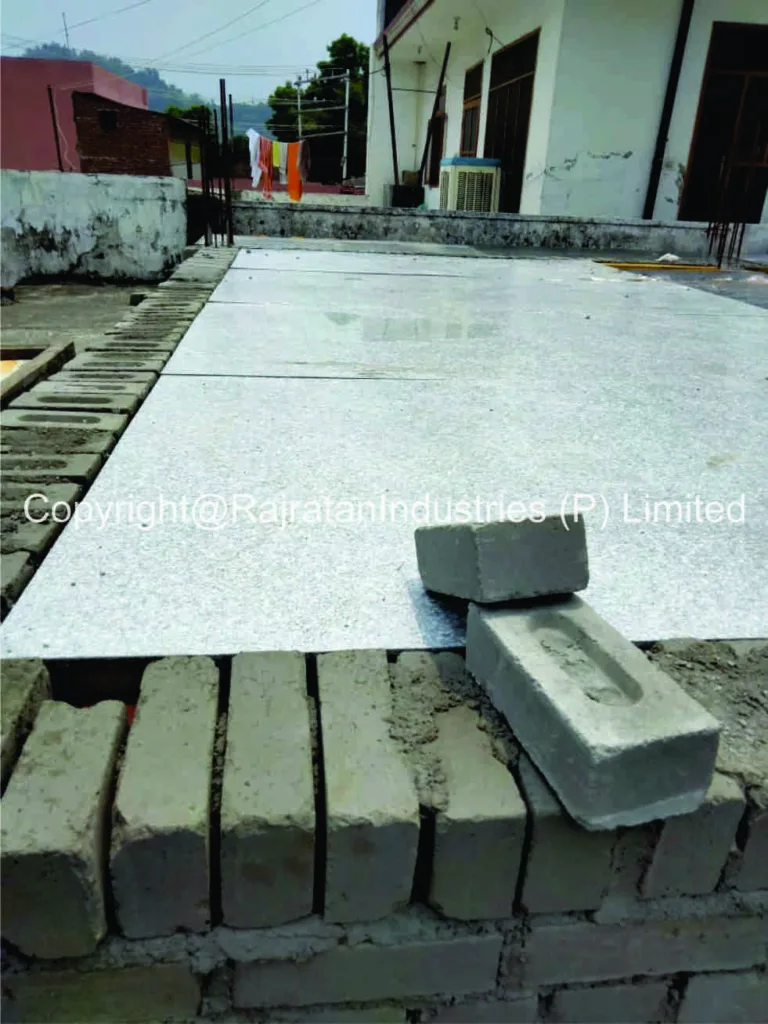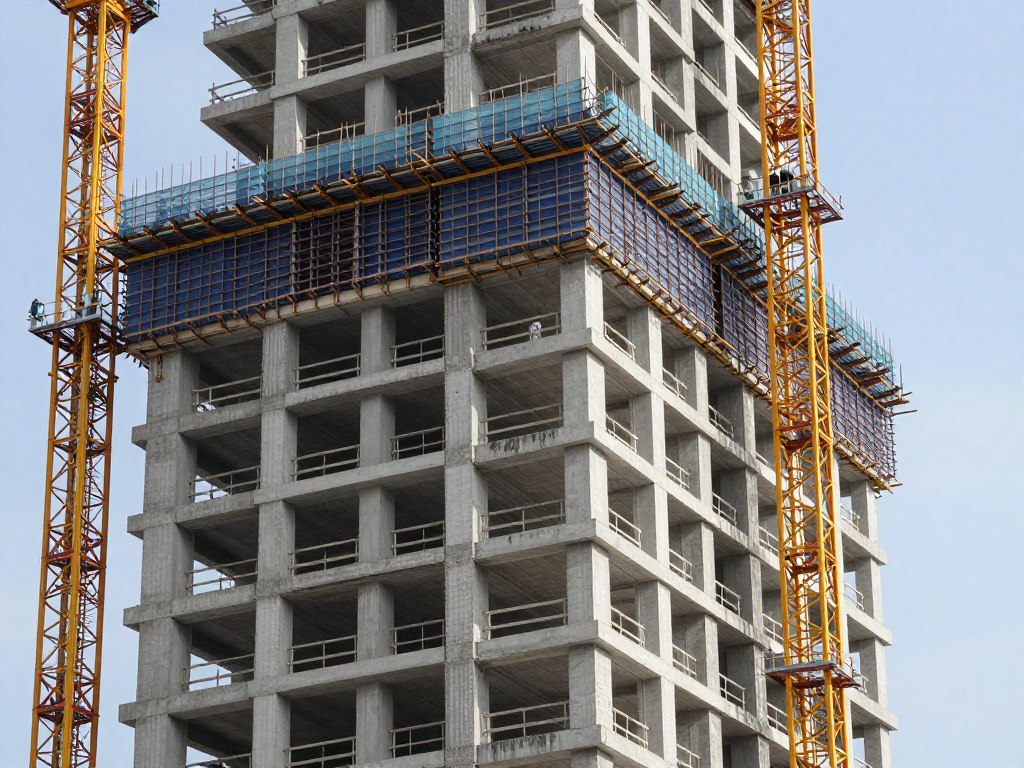
A plastic centering sheet is used in construction to support wet concrete during slab, beam and column casting. It provides a stable surface for concrete formwork and helps maintain the required shape until the concrete gains sufficient strength.
For contractors and homeowners planning a 1000 sq ft roof slab, selecting the right centering material is an important decision. The material should withstand concrete pressure, moisture exposure and repeated site handling without losing its shape.
Traditional plywood is commonly used for centering work, but repeated exposure to water and concrete can cause swelling, edge damage and surface deterioration. This increases replacement requirements and overall construction costs.
PAC® Plastic Centering Sheets by Rajratan offer an alternative with waterproof performance, dimensional stability and higher reuse potential. They can be used for suitable slab, beam and column formwork applications.
Let’s understand how many plastic centering sheets are required for a 1000 sq ft slab, how to calculate the quantity and how different shuttering materials compare in terms of cost and performance.
How Many Plastic Centering Sheets Are Required for a 1000 Sq Ft Slab?
For a standard 1000 sq ft residential slab, approximately 32 standard 8 ft × 4 ft sheets are required to cover the flat slab area.
However, the actual quantity may increase depending on beam dimensions, column drops, cutting requirements and the overall building layout.
Here is the calculation:
- Total slab area: 1,000 sq ft
- Standard sheet size: 8 ft × 4 ft
- Coverage per sheet: 32 sq ft
- Basic sheet requirement: 1,000 ÷ 32 = 31.25 sheets
- Additional allowance: Approximately 15–20% for beam sides, cutting and layout requirements.
Considering an additional 20% allowance:
31.25 + 20% = 37.5 sheets.
Therefore, approximately 38 plastic centering sheets may be required for this example.
For projects with deeper beams, additional structural elements or complex layouts, the quantity may be different. Always calculate the final requirement using the structural drawings and actual formwork dimensions.
Plastic Centering Sheet vs Traditional Marine Plywood
The initial purchase price of a shuttering material is only one part of its overall cost. Its reuse capacity, maintenance requirements and performance during repeated concrete pours also matter.
Traditional marine plywood is generally less expensive initially, but moisture exposure and repeated handling can reduce its usable life.
PAC® Shuttering Boards are designed to offer an alternative for contractors looking for longer-lasting formwork materials.
Parameter | Marine Plywood 12mm | PAC® ECOPRIME Standard | PAC® ECOPRIME Premium |
Indicative price/sq ft | ₹45 | ₹80 | ₹90 |
8 × 4 ft sheet price | ₹1,440 | ₹2,560 | ₹2,880 |
Typical repetitions | 5–6 | 30–40 | 60–100+ |
Water resistance | Prone to edge swelling | Waterproof | Waterproof |
Buyback credit | Not included | Up to 40% | Up to 40% |
Prices and repetition figures are indicative. Actual performance depends on site conditions, installation, handling and maintenance.
Understanding the Cost Per Use
Consider a project using 38 sheets of each material.
Marine Plywood
- Price per sheet: ₹1,440
- Total investment: ₹54,720
- Assumed reuse: 6 times
- Cost per sheet per use: ₹240
PAC® ECOPRIME Standard
- Price per sheet: ₹2,560
- Total investment: ₹97,280
- Assumed reuse: 35 times
- Cost per sheet per use: Approximately ₹73
PAC® ECOPRIME Premium
- Price per sheet: ₹2,880
- Total investment: ₹1,09,440
- Assumed reuse: 60 times
- Cost per sheet per use: ₹48
This comparison highlights why contractors should consider the number of usable repetitions instead of comparing only the initial purchase price.
PAC® boards also come with a 40% buyback credit programme on eligible returned material, subject to applicable conditions. This provides additional value when replacing old boards with new ones.
Technical Specifications of PAC® Shuttering Boards
PAC® is a Plastic Aluminium Composite material developed for construction and industrial applications.
It combines industrial-grade plastics such as PP, LDPE and HDPE with reinforcing materials, including aluminium oxide and cross-linked polymers (XLP).
Rajratan offers different ECOPRIME grades to suit varying formwork requirements.
1. PAC® ECOPRIME Standard – Marble White
ECOPRIME Standard is designed for regular construction and formwork applications.
- Density: 1100 kg/m³
- Thickness options: 12mm and 18mm
- Typical repetitions: 30–40
- Indicative weight: Approximately 40 kg for an 8 × 4 ft, 12mm sheet.
- Applications: Slab shuttering, residential beam panels and general formwork.
2. PAC® ECOPRIME Premium – Marble Black
ECOPRIME Premium is designed for demanding construction applications where higher reuse potential is required.
- Density: 1320 kg/m³
- Thickness options: 12mm and 18mm
- Typical repetitions: 60–100+
- Indicative weight: Approximately 45 kg for an 8 × 4 ft, 12mm sheet.
- Applications: Commercial construction, high-rise projects and suitable heavy-duty formwork.
3. PAC® Heavy-Duty 18mm Board
The 18mm PAC® board is intended for applications requiring a thicker formwork panel.
- Thickness: 18mm
- Indicative price: ₹125 per sq ft.
- Applications: Suitable beam sides, column shuttering and other demanding formwork applications.
The appropriate board thickness should always be selected according to the structural design, concrete pressure and supporting arrangement.
Cutting, Nailing and Oiling: On-Site Workability
One of the practical considerations when choosing a construction shuttering board is how easily it can be handled by the site team.
PAC® boards can be worked with commonly available woodworking equipment, subject to the manufacturer’s cutting and fixing recommendations.
Cutting and Trimming
PAC® sheets can be cut using suitable hand saws or circular saws. Use appropriate blades and cutting techniques to achieve clean edges.
Nailing and Fixing
Standard construction fasteners can be used with suitable fixing arrangements. Ensure proper edge distances and avoid unnecessary damage during installation and removal.
Shuttering Oil
PAC® boards have a non-porous surface that resists water absorption. A suitable release agent may be applied according to site requirements to facilitate concrete removal and cleaning.
Cleaning After Concrete Casting
After de-shuttering, remove concrete residue using suitable cleaning tools and manufacturer-approved cleaning solutions. Clean boards should be stored properly for subsequent use.
Ordering PAC® Plastic Centering Sheets from Rajratan
Rajratan Industries Private Limited manufactures PAC® Shuttering Boards at its facility in Indore, Madhya Pradesh.
The company supplies construction formwork materials to customers across India through established logistics partners.
Trial Orders for Contractors
Contractors and first-time buyers can enquire about trial orders of 5–10 sheets to evaluate the material before purchasing larger quantities.
A site trial allows the construction team to assess:
- Cutting and trimming performance.
- Fixing and nail-holding behaviour.
- Resistance to moisture.
- Concrete release and cleaning.
- Reuse performance under actual site conditions.
Payment and Dispatch
For direct factory orders, the standard payment terms mentioned by Rajratan are:
- 30% advance payment upon order confirmation.
- 70% balance payment before dispatch.
Materials are dispatched through third-party transport and logistics partners. Transportation charges and delivery arrangements are confirmed during order processing.
For current pricing, availability and delivery details, contact the Rajratan sales team.
Frequently Asked Questions
1. How many centering sheets are needed for a 1000 sq ft slab?
Approximately 32 standard 8 × 4 ft sheets are required for the flat slab area. With an additional allowance for beams, cutting and layout requirements, the estimated quantity may increase to approximately 38 sheets.
2. What is the standard size of a plastic centering sheet?
A commonly used sheet size is 8 ft × 4 ft, providing 32 sq ft of coverage. Other sizes and specifications should be confirmed with the manufacturer.
3. What is the price of a PAC® plastic centering sheet?
Based on the indicative rates used in this comparison, PAC® ECOPRIME Standard is ₹80 per sq ft and ECOPRIME Premium is ₹90 per sq ft. Actual prices may vary depending on thickness, quantity and current availability.
4. Can plastic centering sheets be used for beam and column shuttering?
Yes. Suitable PAC® boards can be used for slab, beam and column formwork applications, depending on the board thickness, structural requirements and supporting arrangement.
5. How many times can PAC® shuttering boards be reused?
PAC® ECOPRIME Standard offers approximately 30–40 repetitions, while ECOPRIME Premium offers approximately 60–100+ repetitions under suitable site conditions.
6. Are PAC® plastic centering sheets waterproof?
Yes. PAC® boards are designed to resist water absorption, making them suitable for repeated construction applications involving moisture and wet concrete.
7. Does Rajratan provide a buyback facility?
Rajratan offers a 40% buyback credit programme on eligible returned PAC® boards. The credit can be adjusted against a new purchase according to the applicable programme terms.
8. Can I order a small quantity before placing a bulk order?
Yes. You can enquire about a trial order of 5–10 sheets to evaluate the product on your construction site before placing a larger order.
Conclusion
Choosing the right centering material can make a significant difference to the overall cost and efficiency of slab construction.
For a 1000 sq ft residential slab, approximately 32 standard sheets are required for the flat area, while additional sheets may be needed for beams, columns and cutting requirements.
Although plywood may have a lower initial purchase price, its replacement frequency can increase the total cost over multiple construction projects.
PAC® Plastic Centering Sheets by Rajratan offer an alternative with waterproof performance, dimensional stability and higher reuse potential.
Whether you are a contractor, builder or construction material supplier, selecting a suitable formwork board can help improve material utilisation and manage long-term construction costs.