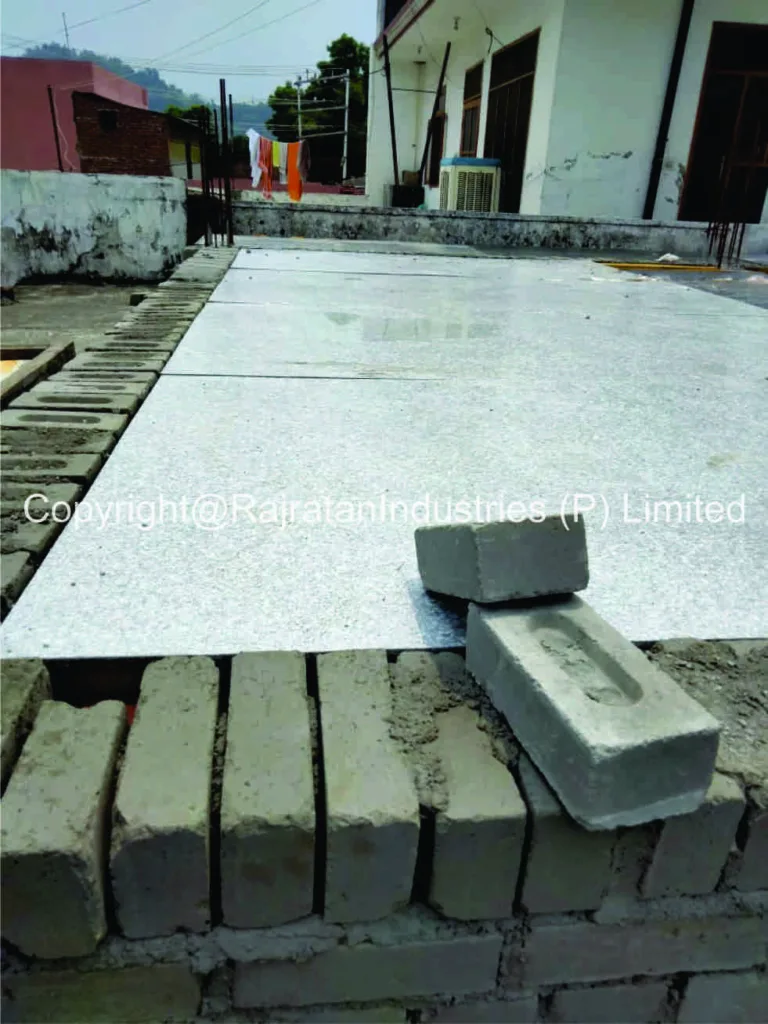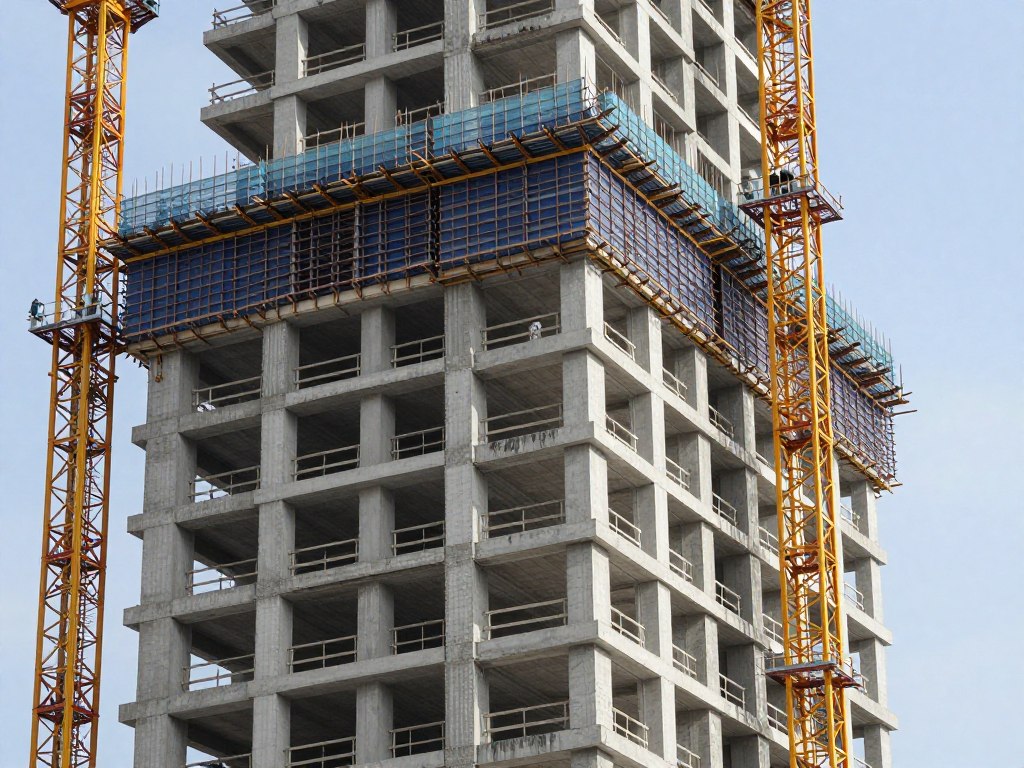
In concrete construction, formwork does much more than simply hold wet concrete in place. The material used for shuttering can directly influence the surface finish of concrete, cost per casting, labour requirements, and overall construction speed.
Traditional plywood remains common across Indian construction sites because it is familiar and initially affordable. However, repeated exposure to water, concrete slurry, shuttering oil, and rough handling can cause plywood to swell, warp, or split.
PAC® Shuttering Board offers a different approach. Made from Plastic Aluminium Composite (PAC®), it is designed as a waterproof and reusable formwork solution for projects where contractors need consistent performance across multiple casting cycles.
So, how much difference can the choice between plywood and PAC® Shuttering Board actually make?
Let’s compare them across the three factors that matter most on-site: concrete finish, cost, and construction speed.
1. How Formwork Material Impacts Concrete Finish
The concrete surface remains in direct contact with the shuttering material until de-shuttering. Because of this, the quality and condition of the formwork surface can directly affect the final appearance of the concrete.
What Happens with Plywood?
Plywood is a wood-based material and can absorb moisture.
As plywood is repeatedly exposed to wet concrete and curing water, its surface and edges may begin to deteriorate. Over multiple repetitions, swelling, damaged edges, and surface irregularities can affect the consistency of the concrete finish.
An uneven finish can also increase the amount of corrective plastering or surface preparation required after de-shuttering.
What Changes with PAC® Shuttering Board?
PAC® Shuttering Board has a waterproof, non-absorbent surface.
Because the board does not absorb water from the concrete slurry, it helps maintain a more consistent contact surface during casting.
This can produce a smooth, uniform concrete finish, particularly when the boards are properly installed, levelled, and maintained.
For suitable slab and ceiling applications, a better surface finish can also reduce the amount of additional plastering required before putty or paint.
In simple terms:
Plywood → Water absorption + surface deterioration → Higher risk of uneven finish
PAC® Board → Waterproof surface + consistent contact → Smoother concrete finish
2. How Formwork Material Impacts Cost
One of the biggest mistakes when comparing shuttering materials is looking only at the purchase price.
Plywood usually has a lower upfront cost.
But shuttering materials are reusable assets. Therefore, the more useful comparison is:
Cost Per Casting
Suppose traditional shuttering plywood costs approximately ₹45 per sq. ft.
If the sheet provides around 5–8 usable repetitions, the cost gets distributed across only a small number of casting cycles.
PAC® boards have a higher initial price but are designed for considerably more repetitions.
Cost Comparison
Factor | Traditional Plywood | ECOPRIME Standard | ECOPRIME Premium |
Approx. Price | ₹45/sq. ft. | ₹80/sq. ft. | ₹90/sq. ft. |
Expected Repetitions | 5–8 | 30–40 | 60–100 |
Approx. Cost/Run Before Buyback | ₹7.50/sq. ft. | ₹2.28/sq. ft. | ₹1.28/sq. ft. |
Buyback | — | 40% applicable value | 40% applicable value |
Actual repetitions depend on site conditions, handling, installation, and maintenance.
This changes the economics significantly.
A contractor may spend more while purchasing the PAC® board initially, but the cost is distributed across many more casting cycles.
The 40% Buyback Advantage
PAC® boards also have an end-of-life advantage.
Under Rajratan’s stated 40% buyback program, used PAC® boards can be returned for an applicable value adjustment against the next purchase.
Even damaged or cut material can remain useful because PAC® material can be recovered and recycled.
This means contractors should compare shuttering materials based on their total lifecycle cost, rather than simply asking which sheet is cheaper to purchase.
3. How Formwork Material Impacts Construction Speed
Construction speed is not determined only by how quickly concrete is poured.
A considerable amount of time is spent preparing, oiling, cleaning, de-shuttering, repairing, and repositioning formwork.
The Plywood Cycle
With plywood, repeated casting can require:
Cleaning → Shuttering Oil → Installation → Concrete Pour → De-shuttering → Scraping → Repair → Reuse
As the plywood becomes older, cleaning and preparation may take longer because concrete residue, damaged surfaces, and swollen edges need attention.
The PAC® Shuttering Board Cycle
PAC® Shuttering Board has a smooth, non-absorbent surface.
This can make cleaning and preparation simpler:
Light Preparation → Installation → Concrete Pour → De-shuttering → Quick Cleaning → Reuse
Concrete residue can generally be removed using water and appropriate scraping or cleaning methods.
The boards also require significantly less shuttering oil compared with conventional plywood.
When this process is repeated across hundreds of shuttering sheets and multiple floors, even small time savings per sheet can improve the overall efficiency of the formwork cycle.
Why Repetitions Matter in Large Construction Projects
The difference between getting 5–8 uses and 30–100 uses from a shuttering sheet becomes much more significant as the size of the project increases.
Consider a project with multiple slabs.
If plywood repeatedly needs replacement, the contractor has to manage:
- New material procurement
- Transportation
- Cutting and preparation
- Removal of damaged sheets
- Additional labour
- Material storage
- Disposal of unusable plywood
A longer-lasting shuttering board reduces the frequency at which this replacement cycle needs to happen.
This is why repetition count can have an impact not only on material cost but also on site logistics and productivity.
PAC® Shuttering Board Options for Different Applications
Different projects require different levels of formwork performance.
ECOPRIME Standard – Marble White
Designed primarily for standard residential slabs, beams, and columns.
Key specifications:
- Thickness: 12 mm / 18 mm
- Density: 1100 kg/m³
- Expected repetitions: 30–40
- Approximate price: ₹80 per sq. ft.
ECOPRIME Premium – Marble Black
Designed for projects requiring higher repetitions and greater stiffness, including high-rise and infrastructure applications.
Key specifications:
- Thickness: 12 mm / 18 mm
- Density: 1320 kg/m³
- Expected repetitions: 60+, with up to 100+ possible under suitable site conditions
- Approximate price: ₹90 per sq. ft.
18 mm PAC® Shuttering Board
For demanding applications such as:
- Heavy RCC columns
- Retaining walls
- Bridges
- Heavy slab systemsThe 18 mm variant is priced at approximately ₹125 per sq. ft.
Can PAC® Boards Be Used with Existing Site Tools?
Changing shuttering material should not mean replacing every tool on-site.
PAC® Shuttering Boards can be worked using commonly available carpentry tools.
They can be:
- Cut using hand saws or circular saws
- Drilled using regular tools
- Nailed using standard nails
- Screwed according to site requirements
For contractors unsure about changing materials, testing 5–10 sheets on a active project can be a practical first step.
The site team can cut, nail, install, cast, de-shutter, clean, and reuse the boards under actual working conditions before a larger quantity is considered.
PAC® Shuttering Board vs Plywood: At a Glance
Factor | Plywood | PAC® Shuttering Board |
Water Resistance | Can absorb moisture | Waterproof |
Repetitions | Approx. 5–8 | 30–100 depending on grade |
Concrete Finish | Can deteriorate with repeated use | Smooth, consistent surface |
Cleaning | Can require scraping | Easier cleaning |
Shuttering Oil | Higher requirement | Minimal requirement |
Cost Per Use | Higher over repeated cycles | Lower with higher repetitions |
End-of-Life Value | Limited | Buyback program available |
Cutting & Nailing | Easy | Can use regular site tools |
So, Which Formwork Material Makes More Sense?
There is no single shuttering material that is ideal for every construction project.
For a small project where the material will only be used a few times, plywood’s lower initial price may still be attractive.
But when a project involves multiple slabs, repeated casting cycles, or long-term formwork requirements, the calculation changes.
A reusable PAC® Shuttering Board can help address three important areas simultaneously:
Better Finish: A waterproof and consistent formwork surface can help produce smoother concrete.
Lower Lifecycle Cost: More repetitions distribute the purchase price across significantly more casting cycles.
Faster Workflow: Easier cleaning, reduced oiling, and repeated reuse can simplify the shuttering cycle.
Frequently Asked Questions
How many times can PAC® Shuttering Board be reused?
Depending on the grade and site conditions, ECOPRIME Standard is designed for approximately 30–40 repetitions, while ECOPRIME Premium can provide 60+ repetitions and up to 100+ uses under suitable conditions.
Is PAC® Shuttering Board waterproof?
Yes. PAC® Shuttering Board is designed as a waterproof formwork material and does not absorb water like plywood.
Does PAC® Board require shuttering oil?
The smooth surface means significantly less shuttering oil may be required compared with plywood. Requirements can vary according to concrete mix and site practices.
Can PAC® Shuttering Board be cut and nailed?
Yes. Standard carpentry tools can be used for cutting, drilling, nailing, and screwing the boards.
Is PAC® Shuttering Board more expensive than plywood?
Its initial purchase price is higher than standard plywood. However, because PAC® boards are designed for considerably more repetitions, their cost per casting can be lower over their usable life.
Conclusion
The material used for shuttering affects much more than the formwork itself.
It influences how the concrete looks after de-shuttering, how much you spend across repeated casting cycles, and how efficiently your shuttering team can move from one pour to the next.
Plywood may offer a lower initial investment, but its limited repetitions and sensitivity to moisture can increase long-term replacement and maintenance requirements.
PAC® Shuttering Board takes a lifecycle approach: higher repetitions, waterproof performance, smoother concrete finish, easier reuse, and recoverable end-of-life material.
For contractors handling repeated RCC casting, the smarter comparison is therefore not simply:
“Plywood or plastic?”
It is,
“Which formwork material gives the project the best finish, lowest cost per use, and most efficient casting cycle?”