
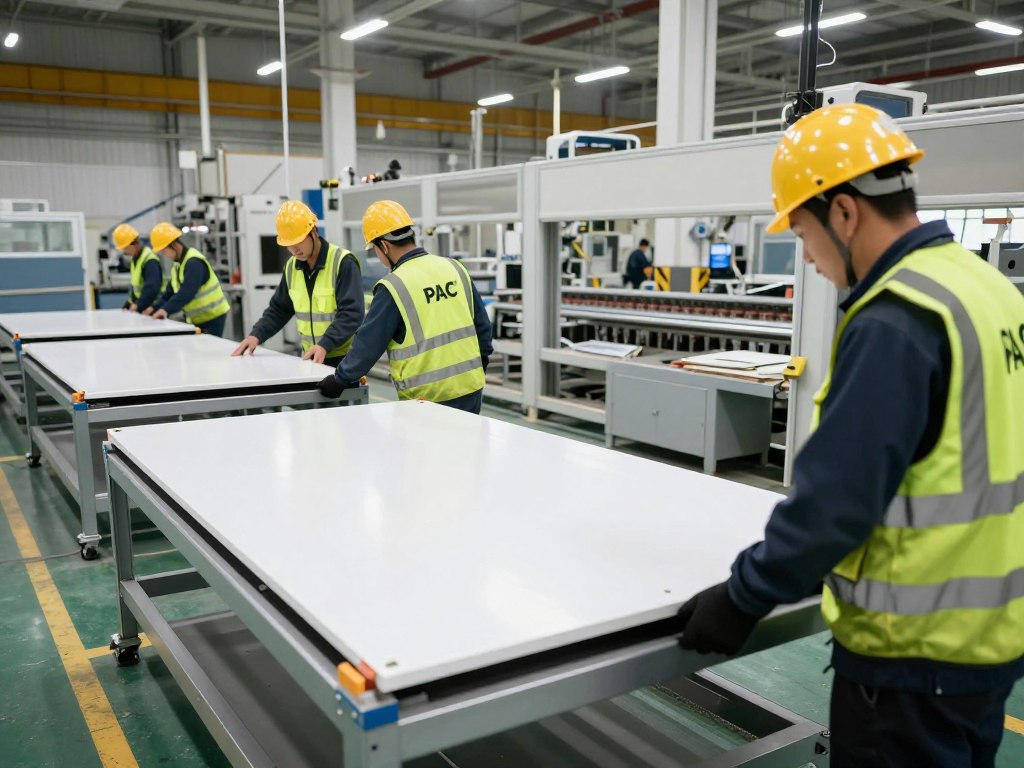
Slab casting is one of the most critical stages of any construction project. Get the formwork wrong, and you risk an uneven surface, leakage during pouring, or worse, structural deflection once the concrete sets. Choosing the right shuttering board for slab work and fixing it correctly is what separates a smooth, level slab from one that needs costly rework. This guide walks through the complete process of fixing shuttering boards for slab applications, using composite PAC boards as the reference material, along with the precautions that help you get maximum repetitions out of every board.
Why the Right Shuttering Board for Slab Work Matters
Slab formwork carries the full weight of wet concrete spread horizontally across a large span, which means the board underneath has to resist sagging, water absorption, and surface damage throughout the curing period. Traditional plywood tends to swell and lose shape after just a few uses, which directly affects slab flatness on subsequent pours. A composite shuttering board for slab work, built from industrial-grade plastics (PP, LDPE, HDPE), aluminum oxide, fibre, and cross-linked polymer (XLP) metals, is engineered specifically to resist this kind of degradation. It stays flat, doesn’t absorb moisture, and can be reused 30 to over 100 times depending on the grade, making it a far more dependable choice for slab casting than conventional timber.
Step 1: Plan the Support Structure
Before any board is laid, the supporting framework needs to be set up correctly. Slab shuttering typically rests on a grid of props, beams, and battens that carry the load down to the ground or the floor below. The spacing of these supports should be calculated based on the slab thickness and expected load, since the shuttering board itself is only as good as what holds it up. Where wooden scaffolding is used, additional support should be added as per the specific structural requirement, and the framework should be checked for level before boards are placed on top.
Step 2: Fix the Boards to the Support Framework
Once the support grid is ready, the shuttering boards are laid across the battens and fixed in place using screws. This is the same method used for general formwork: screws are driven through the board into the planks and supports beneath, holding the board firmly flat across the span. Unlike plywood, which often needs extra bracing to stop warping under load, composite boards require no additional workmanship for installation, since their inherent stability keeps them flat once properly screwed down.
For slab applications specifically, boards should be butted tightly against each other at the joints to prevent slurry leakage during the pour. Any small gaps between boards or at the edges should be sealed before concreting begins, since water and cement paste will find their way through even minor openings, leaving lines or honeycombing on the underside of the finished slab.
Step 3: Where Steel Frames Are Used
In larger or repetitive slab projects, ready-made shuttering panels with steel frames are often used instead of loose boards on wooden battens. In this setup, the shuttering board for slab work is mounted inside a welded steel frame, and rivets are used to fix the board securely to the frame. This combination gives the panel extra rigidity, allows faster assembly and disassembly on site, and supports a higher number of repetitions since the steel frame protects the board edges from impact damage during handling.
Step 4: Apply Forming Oil Before Pouring
Before the concrete is poured, a suitable forming oil should be applied to the surface of the board. This thin coating prevents the concrete from bonding directly to the board, which makes de-shuttering easier and protects the board’s surface finish over repeated uses. Skipping this step is one of the most common reasons boards wear out faster than expected, regardless of how good the material is.
Step 5: Pour and Cure
With the boards fixed, sealed, and oiled, the slab can be poured and reinforcement tied in as per the design. Composite shuttering boards offer a smooth, matt finish on both faces, which translates into a cleaner underside finish on the slab once the formwork is removed, often reducing the need for additional plastering work afterward. The water-resistant nature of these boards also means they won’t swell or distort while the concrete cures, keeping the slab surface flat and consistent across the full pour.
Step 6: De-Shuttering and Aftercare
Once the concrete has cured sufficiently, the boards can be removed from the slab. A few precautions at this stage make a significant difference to how many more times the board can be reused:
Boards should be handled with care and stacked properly immediately after removal, rather than left lying around the site where they can be stepped on or damaged. Any concrete particles stuck to the surface should be cleaned off with water before the board goes back into storage, since dried residue is harder to remove later and can affect the surface finish on the next pour. Boards should then be stacked on a level surface to avoid warping while in storage.
One detail that’s often overlooked is corner handling. Sudden drops or impacts at the corners of a board during de-shuttering are one of the fastest ways to shorten its service life. Lowering boards carefully rather than letting them fall from height will noticeably extend the number of repetitions you get out of each panel.
Common Applications Beyond Slabs
While this guide focuses on slab work, the same fixing principles apply across other structural applications including retaining walls, columns and beams, dividers, gutters, and precast concrete elements. The consistency of the fixing method, screwed onto wooden battens or riveted into steel frames, makes composite shuttering boards a versatile, drop-in replacement across most form work applications on a typical construction site.
Conclusion
Fixing a shuttering board for slab work correctly comes down to a few fundamentals: a properly spaced support structure, secure screwing or riveting to the frame, tight joints to prevent leakage, a forming oil application before pouring, and careful handling during de-shuttering. Get these steps right, and a quality composite board like PAC can deliver 30 to 100+ repetitions with a consistently smooth finish, making slab casting faster, more predictable, and more cost-effective over the life of a project compared to traditional plywood formwork.
Lorem ipsum dolor sit amet, consectetur adipiscing elit. Ut elit tellus, luctus nec ullamcorper mattis, pulvinar dapibus leo.