Introduction
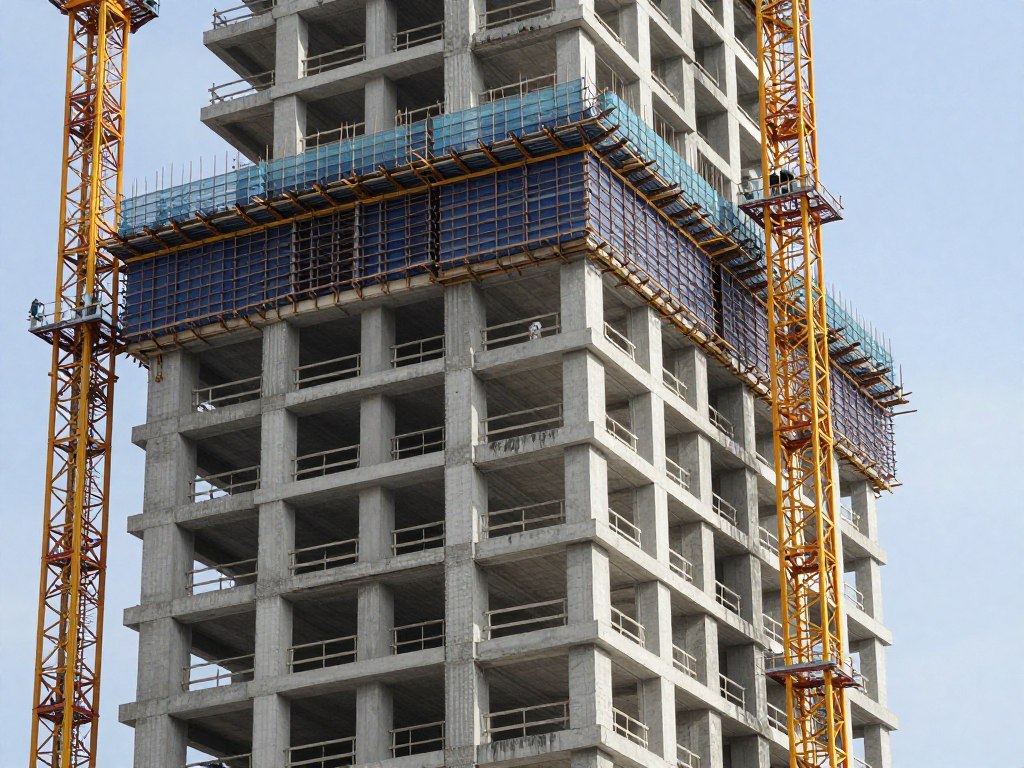
In multi-storey construction, time is one of the most important factors affecting project costs and productivity. A faster floor cycle can help contractors manage labour, equipment, material movement and site overheads more efficiently.
A 7-day floor cycle is a construction planning target in which the team aims to complete a defined sequence of activities for one floor within seven days. Achieving this target depends on several factors, including reinforcement work, formwork installation, concrete placement, curing requirements, material availability and the approved de-shuttering schedule.
While concrete mix design and site coordination receive considerable attention, formwork performance also plays an important role. Damaged shuttering boards, time-consuming cleaning, surface repairs and inconsistent panel dimensions can disrupt the planned sequence of work.
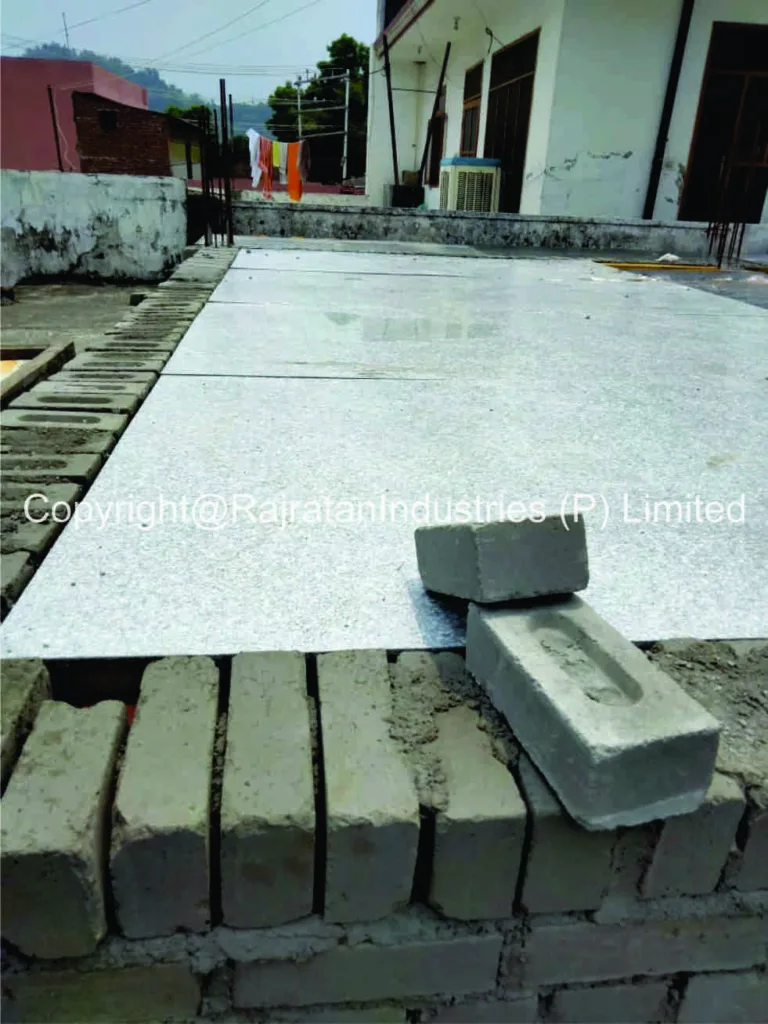
This is where a well-selected PAC® plastic shuttering board can help. Rajratan’s PAC® formwork boards are designed to support repeated use and simplify routine formwork maintenance. When combined with proper structural planning and site management, they can help contractors improve formwork turnaround and work towards more predictable floor cycles.
Why Traditional Plywood Can Slow Down Floor Cycles
Traditional film-faced plywood remains widely used in construction. However, its performance can deteriorate with repeated exposure to moisture, handling and concrete placement, depending on its quality, condition and maintenance.
Three common challenges can affect formwork productivity.
1. Moisture Exposure and Board Deterioration
Repeated exposure to water and wet concrete can damage the edges and surface layers of some plywood boards. Swelling, delamination and warping may affect panel alignment and create gaps between adjoining sheets.
These gaps can contribute to concrete leakage, uneven surface finishes and additional repair work after stripping. Site teams may then need to spend extra time replacing damaged sheets or correcting panel joints.
PAC® plastic shuttering boards offer an alternative to conventional wood-based formwork. Their resistance to moisture-related deterioration can help maintain panel condition over repeated cycles when the boards are used and handled according to manufacturer recommendations.
2. Slow De-Shuttering and Surface Cleaning
Concrete residue and deteriorated formwork surfaces can make panel removal more difficult. Excessive force during de-shuttering may damage panel edges, concrete corners or the formwork itself.
A suitable formwork surface, combined with correct release-agent application and a planned stripping procedure, can make panel cleaning and reuse more manageable.
PAC® boards have a smooth surface intended to support concrete release and routine cleaning. Actual stripping time will still depend on the concrete mix, curing conditions, release agent, panel condition and site practices.
3. Repeated Repairs and Maintenance
Plywood panels may require edge repairs, patching, cleaning and replacement as their condition deteriorates. These tasks can interrupt the movement of formwork from one floor to the next.
Choosing boards designed for repeated use can help reduce maintenance interruptions and improve the utilisation of formwork inventory. Contractors should assess both the initial purchase price and the expected number of usable repetitions when comparing materials.
A Practical Seven-Day Floor-Cycle Planning Framework
A seven-day floor cycle should be treated as a project-specific planning target, not a fixed schedule suitable for every building. The sequence must account for the structural design, construction method, concrete strength development, safety requirements and approvals from the responsible engineer.
A sample planning framework is shown below.
Day | Illustrative Activity |
Day 1 | Column reinforcement, preparation and approved starter or base work |
Day 2 | Column formwork installation, checks and concrete placement |
Day 3 | Slab staging, beam supports and soffit formwork installation |
Day 4 | Slab and beam reinforcement, embedded services and inspection |
Day 5 | Pre-pour checks and slab and beam concrete placement |
Day 6 | Concrete curing, strength monitoring and preparation for the next work sequence |
Day 7 | De-shuttering or formwork transfer only where permitted by the approved stripping and reshoring plan |
This is an illustrative sequence, not an instruction to remove formwork on Day 7 regardless of concrete strength. The actual programme may require overlapping activities, additional time or a different sequence.
Important: Slab and beam formwork, props and reshoring must remain in place until removal is permitted under the approved method statement and applicable engineering requirements. A floor-cycle target must never override concrete strength, structural safety or site inspection requirements.
Five Formwork Planning Tips to Improve Floor-Cycle Efficiency
Tip 1: Select Formwork Boards for Repeated Use
The choice of shuttering material affects maintenance requirements, panel consistency and long-term cost.
A PAC® formwork board is a Plastic Aluminium Composite board manufactured using a composite material formulation. Rajratan’s product information describes its boards as using industrial plastic, aluminium oxide and XLP-related components.
Compared with wood-based panels, plastic composite boards can offer advantages in moisture resistance and resistance to swelling or delamination associated with timber products. These characteristics can help contractors manage boards through repeated casting cycles.
Before selecting a board, assess its specifications, thickness, density, intended application, support arrangement and compatibility with the project’s formwork design.
Tip 2: Establish a Consistent Cleaning and Release Routine
A predictable maintenance routine helps crews prepare panels for the next pour without unnecessary delays.
After de-shuttering:
- Remove concrete residue using the cleaning method recommended by the manufacturer.
- Inspect the panel surface, edges and fixing points for damage.
- Apply an approved release agent where required.
- Stack and store the boards safely to prevent damage during handling and transportation.
- Separate damaged panels for inspection rather than automatically returning them to service.
PAC® plastic shuttering boards have a smooth surface intended to support cleaning and concrete release. The amount and type of release agent required should follow the manufacturer’s instructions and the site’s concrete-finishing requirements.
Tip 3: Standardise Panel Sizes and Fabrication Procedures
Standardised panel dimensions and cutting plans can simplify inventory management, installation and material movement between floors.
Rajratan PAC® shuttering boards are available in different thickness options, including 12 mm and 18 mm. Sheet dimensions, fixing methods and cutting requirements should be confirmed against the specific product supplied.
For efficient execution:
- Prepare a cutting and panel layout before fabrication.
- Use suitable cutting tools and follow the manufacturer’s fabrication guidance.
- Establish consistent fixing details and inspect joints before concrete placement.
- Label and organise panels by size and application.
- Check panel condition before reuse.
Do not select board thickness based on the application name alone. The appropriate board, support spacing, reinforcement arrangement and fixing details must be determined by the formwork design and anticipated loads.
Tip 4: Plan for Concrete Finish and De-Shuttering Quality
The quality of the formwork surface can influence the finish of the cast concrete. A smooth, well-maintained panel may help achieve a more consistent surface, subject to concrete placement, compaction, mix design and release-agent application.
A suitable surface finish may also reduce certain finishing tasks after de-shuttering. However, plastering requirements depend on the specified finish, construction tolerances and the actual condition of the concrete.
For the best results, inspect panels before each pour and maintain consistent installation practices across floors.
Tip 5: Evaluate Reuse and Buyback Options
Formwork is a capital expense, so procurement decisions should consider more than the purchase price.
Boards that remain serviceable across multiple cycles may reduce the amount of replacement material required. Where a manufacturer offers a buyback programme, the applicable terms may also affect the overall cost of ownership.
Rajratan has promoted a 40% buyback programme for eligible boards. Contractors should confirm the current eligibility criteria, valuation basis, board condition requirements and replacement-purchase terms before including any buyback value in their project budget.
PAC® Shuttering Board vs Film-Faced Plywood
The following comparison uses indicative product information for Rajratan ECOPRIME Standard and ECOPRIME Premium boards. Confirm current specifications and commercial terms with Rajratan before procurement.
Feature | Film-Faced Plywood | ECOPRIME Standard | ECOPRIME Premium |
Material type | Wood veneers with resin and film | PAC® composite | PAC® composite |
Surface colour | Commonly brown or red | Marble White | Marble Black |
Indicative density | Varies by product | 1,100 kg/m³ | 1,320 kg/m³ |
Available example thickness | Depends on product | 12 mm | 12 mm |
Indicative reuse information | Depends on quality and site conditions | 30–40 uses | 60–100+ uses |
Indicative price | ₹45–₹55 per sq. ft. in the supplied comparison | ₹80 per sq. ft. | ₹90 per sq. ft. |
Moisture-related performance | May swell or delaminate with deterioration | Designed for moisture resistance | Designed for moisture resistance |
Buyback option | Depends on the supplier | Confirm current terms | Confirm current terms |
Note: Plywood prices and repetition counts vary significantly with product grade, handling, concrete practices and site conditions. PAC® repetition figures and prices are indicative supplied product information, not a guarantee of results on every project. Board weight, load capacity and formwork suitability should be confirmed using current technical documentation.
Understanding Cost Per Use
A higher initial purchase price does not necessarily mean a higher long-term cost. For reusable formwork, a useful starting point is to calculate the purchase cost per usable casting cycle.
Basic formula:
Cost per use per square foot = Purchase price per square foot ÷ Number of usable repetitions
Using the indicative prices and repetition figures above:
Board | Indicative Price | Illustrative Repetitions | Purchase Cost per Use |
Film-faced plywood | ₹50/sq. ft. | 5–10 | ₹5–₹10/sq. ft. |
ECOPRIME Standard | ₹80/sq. ft. | 30–40 | ₹2.00–₹2.67/sq. ft. |
ECOPRIME Premium | ₹90/sq. ft. | 60–100 | ₹0.90–₹1.50/sq. ft. |
These figures are simple purchase-price calculations, not total project cost estimates. They exclude labour, cleaning, release agents, transport, repairs, financing, unusable damage and any buyback proceeds.
For a more accurate comparison, contractors should use their own expected reuse rate and include the full cost of maintaining, handling and moving the boards. This provides a more reliable basis for deciding which formwork system offers better value for a particular project.
On-Site Handling and Procurement Advice
A successful transition to plastic composite formwork requires clear procedures for fabrication, installation, cleaning and storage.
Cutting and Fabrication
Use suitable cutting equipment and blades recommended for the supplied board. Trial-cut a sample where necessary and inspect the edges before proceeding with bulk fabrication.
Nailing, Screwing and Fixing
Confirm the permitted fixing methods and edge distances with the manufacturer. Nail spacing should not be assumed to be universal: the correct pattern depends on the board specification, supporting members, loads and approved formwork design.
Inspect fixing points and panel edges before each pour. Replace or assess damaged panels where their condition may affect safety or concrete quality.
Cleaning and Chemical Use
Clean panels using the manufacturer’s recommended procedure. Do not apply dilute acid or other aggressive chemicals unless the manufacturer has explicitly approved the chemical, concentration, exposure time and handling procedure. Use suitable personal protective equipment and follow site chemical-safety requirements.
Trial Orders and Technical Evaluation
For contractors evaluating a new shuttering material, a small trial order can help the site team assess:
- Cutting and fabrication requirements.
- Compatibility with existing formwork arrangements.
- Concrete finish and release performance.
- Cleaning time and maintenance requirements.
- Panel condition after repeated use.
Confirm current minimum order quantities and availability directly with the supplier.
Delivery and Commercial Terms
Rajratan’s shuttering board operations are based in Indore, Madhya Pradesh, and the company serves customers through transport arrangements. Delivery times, dispatch schedules, freight charges, payment terms and minimum order quantities can vary by destination and order size.
Confirm the current commercial terms and delivery schedule with the sales team before planning procurement around a particular floor cycle.
Frequently Asked Questions
1. Can PAC® plastic shuttering boards help achieve a seven-day floor cycle?
They may help improve formwork turnaround by supporting repeated use and simplifying routine cleaning and maintenance. However, achieving a seven-day floor cycle also depends on labour availability, reinforcement progress, concrete strength development, formwork design, inspections and site coordination.
2. Are PAC® shuttering boards suitable for wet construction environments?
PAC® boards are designed to offer moisture resistance compared with conventional wood-based formwork. Contractors should confirm the specific product’s technical data and follow the manufacturer’s handling, installation and storage instructions.
3. How many times can a PAC® shuttering board be reused?
The indicative product information supplied for Rajratan lists approximately 30–40 uses for ECOPRIME Standard and 60–100+ uses for ECOPRIME Premium. Actual repetitions depend on handling, support conditions, fixing practices, cleaning, storage and site conditions. These figures should be treated as product guidance rather than a guaranteed outcome.
4. Can 12 mm boards be used for slabs and 18 mm boards for columns or bridge decks?
Thickness alone does not establish suitability for a particular structural application. Board selection must account for concrete pressure, support spacing, span, fixing arrangements, deflection limits and the approved formwork design. Consult the product’s technical documentation and the responsible formwork or structural engineer before use.
5. Does a smooth shuttering board eliminate the need for plastering?
Not necessarily. A suitable formwork surface can help achieve a more consistent concrete finish, but the need for plastering depends on the specified finish, workmanship, concrete quality and project requirements.
6. How does Rajratan’s 40% buyback programme work?
Rajratan has advertised a 40% buyback programme for eligible boards. The precise valuation method, eligibility conditions, board-return requirements and credit terms should be confirmed with the company before purchase.
7. What is the best way to compare plywood and PAC® boards?
Compare the initial price, expected usable repetitions, cleaning and repair requirements, handling costs, concrete finish, logistics and any applicable buyback terms. Cost per use is a useful starting point, but the final decision should reflect actual site performance and project requirements.
Conclusion
A predictable floor cycle requires more than faster concrete placement. Formwork selection, panel condition, maintenance routines, procurement planning and safe de-shuttering procedures all influence construction productivity.
PAC® plastic shuttering boards offer an alternative to conventional plywood for contractors seeking a reusable formwork solution. Their potential benefits include moisture resistance, a smooth surface and reduced maintenance associated with wood-based panel deterioration.
Rajratan’s ECOPRIME Standard and Premium boards provide different product options for project teams to evaluate. Before choosing a board, compare the current technical specifications, expected repetitions and full cost per use, and ensure that the formwork system is designed and operated in accordance with engineering and safety requirements.
Planning a formwork upgrade for your next project?
Explore Rajratan PAC® Shuttering Boards at shutteringboard.rajratan.in or contact the team to discuss product specifications and procurement requirements.
Rajratan Industries Private Limited
123–124, First Floor, Shastri Market, Opp. Gandhi Hall, Indore – 452007, Madhya Pradesh, India
Phone: +91 9685727927
Email: info@rajratan.in
Website: rajratan.in