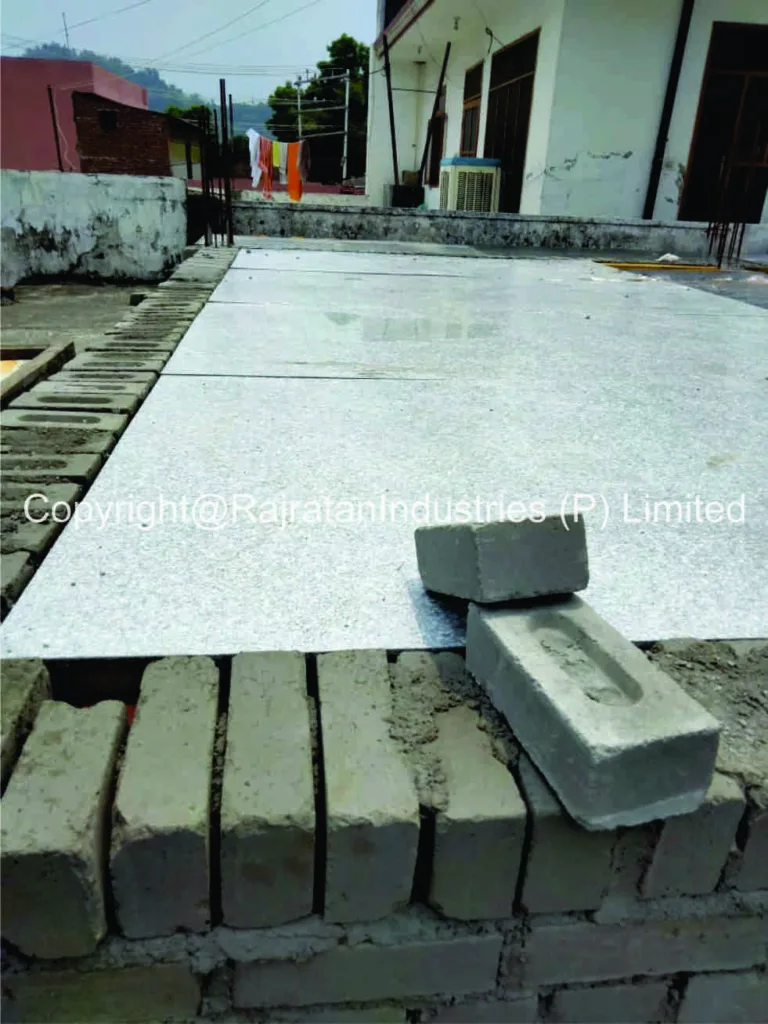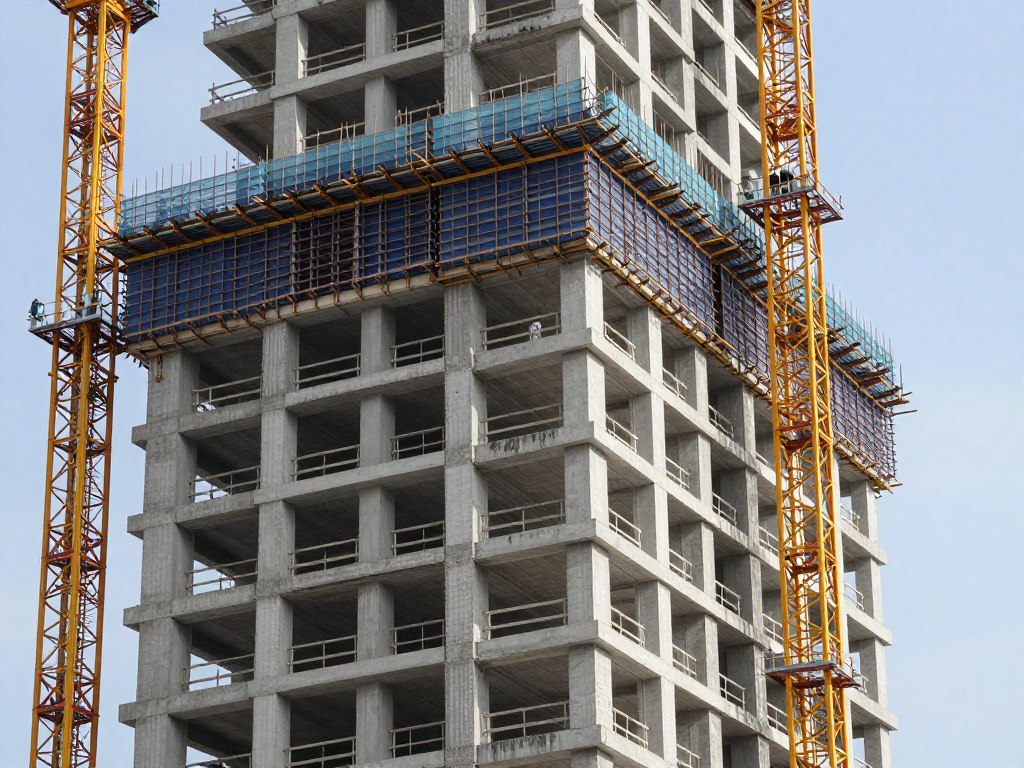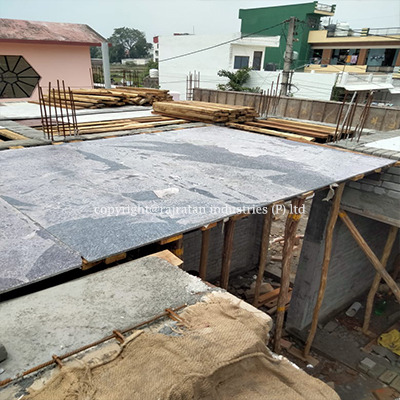
A beam shuttering board is a temporary formwork sheet used to contain and mold freshly poured concrete into structural RCC beams until the concrete gains adequate load-bearing strength.
If you have managed a slab casting on an Indian construction site during the monsoon, you know the headache of cheap shuttering plywood. Rain turns plywood edges into soft, swollen sponges. The layers split, slurry leaks through gaps, and your site supervisor spends hours arguing with laborers over bad concrete finishes.
Switching to a modern PAC Shuttering Board (Plastic Aluminium Composite) solves these problems permanently. Made from industrial plastics, aluminium oxide, and cross-linked polymers, these boards are 100% waterproof and offer a high repetition shuttering board solution that lasts up to 100+ uses.
In this practical guide, we cover standard sheet sizes, step-by-step fixing methods for beams, standard de-shuttering (stripping) timelines, and real jobsite economics.
–Standard Sizes and Thicknesses for Beam Shuttering Boards
Standard beam shuttering boards are supplied in 8 ft x 4 ft (2440 mm x 1220 mm) dimensions, with 12mm and 18mm thickness options engineered specifically for horizontal structural formwork. Smaller custom sizes like 7 ft x 3 ft and 8 ft x 3 ft are also available for tighter beam sections and column centering board setups.
Selecting the right thickness depends on the depth and span of your concrete beam:
12mm Thickness: Best suited for beam side shuttering, light secondary beams, slab borders, and standard column shuttering board applications.
18mm Thickness: Ideal for heavy main beams, deep transfer beams, RCC columns, bridge decks, and retaining walls where wet concrete pressure is high.
Rajratan manufactures two distinct material grades of **PAC formwork board** for beam shuttering:
For contractor teams looking for detailed board specifications, check out our complete breakdown of [PAC Shuttering Board Technical Specs](https://shutteringboard.rajratan.in).
Step-by-Step Fixing Method for Beam Formwork
Fixing a plastic centering board for beam formwork requires standard carpentry tools, proper bracing, and systematic alignment to prevent bulging under wet concrete load.
Because PAC shuttering board works just like marine plywood, your site carpenters do not need special training. They can cut, drill, plane, and nail these boards using their regular circular saws and hammers.
BEAM FORMWORK CROSS-SECTION
[ Side Board ] [ Side Board ]
[ (12mm/18mm) ] Concrete [ (12mm/18mm) ]
+————-+ Filling +————-+
| Runner/Tie |==============| Runner/Tie |
+————-+—————+————-+
[ Bottom Board ]
[ (18mm PAC) ]
+————–+
| Bottom Runner|
+————–+
||
[ Vertical Prop ]
Step 1: Bottom Soffit Board Setup
Place the bottom soffit board along the marked beam center line. Secure the board on top of timber runners or steel hollow pipes supported by adjustable steel props (acrow spans or vertical jacks). Ensure the bottom board is level from column to column.
Step 2: Side Shutter Board Installation
Measure and cut the side panels using an 80-tooth or 100-tooth TCT circular saw blade for clean edges. Fix vertical wooden battens or steel runners on the back of the side boards at 300mm to 400mm intervals to prevent flex.
Step 3: Corner Nailing and Joint Sealing
Join the side panels to the bottom soffit board using 2-inch or 2.5-inch steel nails. Since **plastic centering board** material does not split near the edges like plywood, nails grip firmly. Apply foam tape or masking tape over panel joints to guarantee zero slurry leakage.
Step 4: Tie-Rods and Top Bracing
For beams deeper than 450mm, drill holes through the side panels and pass tie-rods through PVC sleeves. Tighten wing nuts against external steel channels (walers). For shallow edge beams, install diagonal wooden or steel props (kickers) tied to the slab deck to keep the beam sides plumb.
### Step 5: Shuttering Oil Application
Unlike plywood that drinks up shuttering oil, high-density PAC boards need only a paper-thin coat of water-based release agent. Many contractors run them completely dry for overhead beams because the non-reactive plastic surface releases cleanly from hardened concrete without sticking.
De-Shuttering Time for Beams (IS Code Recommendations)
De-shuttering time (stripping time) for beams is the minimum concrete curing duration required before removing side shuttering or bottom soffit props safely.
According to IS 456:2000 (Clause 11.3), stripping time depends on ambient temperature, cement type, and structural load position. Using a non-absorptive **construction shuttering board** like PAC ensures the concrete retains essential hydration moisture, curing uniformly without edge chipping during removal.
IS 456 DE-SHUTTERING TIMELINE FOR BEAMS
Beam Sides (Vertical) : 16 – 24 Hours
Beam Soffits (Props Left) : 7 Days
Props: Beams up to 6m : 14 Days
Props: Beams over 6m : 21 Days
Here is the standard stripping schedule for beams under regular site conditions (using OPC cement at temperatures above 15°C):
- Vertical Beam Sides (Side Formwork)
Time Required:16 to 24 Hours.
Action:Remove lateral braces, tie-rod wing nuts, and side shutter panels. Because PAC material is non-porous, the board pops off smoothly without stripping concrete corners or sticking to fair-faced surfaces.
- Beam Soffits (Bottom Boards with Props Left Standing)
Time Required:7 Days.
Action:Gently lower the soffit board while keeping vertical steel props wedged directly beneath the beam to carry self-weight.
- Vertical Props Under Beams (Spans up to 6 Meters)
Time Required: 14 Days.
Action: Remove props systematically starting from the middle of the span working outward toward the supports.
- Vertical Props Under Beams (Spans over 6 Meters)
Time Required:21 Days.
Action: Full prop removal allowed once concrete achieves over 90% of its target characteristic strength (fck).
Site Tip: Never strip bottom props early to meet tight site deadlines. However, side shuttering boards can be unbolted in 18 hours and immediately remounted on the next floor’s beam layout, maximizing equipment utilization.
Cost-per-Use Economics: Plywood vs. PAC Shuttering Boards
Calculating formwork expense on single-sheet purchase price is a costly mistake; calculating **cost-per-pour** reveals true jobsite savings.
Let us compare the real costs over 60 pours:
COST PER POUR COMPARISON
Traditional Plywood : [₹45/sq.ft original] / [5 Pours] = ₹9.00 / sq.ft / pour
PAC Premium Board : [₹90/sq.ft original] / [60 Pours] = ₹1.50 / sq.ft / pour
Film-Faced Plywood:A decent 12mm plywood sheet costs ~₹45 to ₹50 per sq. ft. It lasts 5 to 7 pours before water swelling, delamination, and nail-hole damage make it unusable scrap. Cost per pour = ₹8 to ₹10 per sq. ft.
PAC ECOPRIME Premium:A 12mm premium board costs ₹90 per sq. ft. It delivers 60 to 100+ reuses without swelling, warping, or rotting. Cost per pour = ₹1.50 per sq. ft.
The 40% Buyback Asset Guarantee
Plywood turns into useless trash that costs money to haul away. Rajratan provides a **40% Buyback Guarantee** on used PAC sheets.
When your shuttering boards are finally beaten up after years of hard site use, return the scrap panels to our factory. We credit 40% of their scrap value directly against your new order of boards or [PAC Heavy Duty Brick Pallets](https://pallets.rajratan.in). This closed-loop circular economy turns your formwork expense into a reusable capital asset.
Common Jobsite Concerns Solved
What about moisture damage during outdoor storage?
Traditional plywood rots when stacked in rain or waterlogged mud. PAC is a 100% **green building material** made with zero wood fiber. You can store these boards under open skies, completely submerged in rain, or near acidic soil without any swelling or degradation.
How do we order trial loads or sample boards?
We suggest contractors start with a small trial order of **5 to 10 sheets**. Put them on your toughest beam or column sections. Test cutting, nailing, site handling, and concrete finish directly under your own site supervisors before ordering a full truckload.
Payment Policy: Standard terms are 30% advance order lock and 70% balance payment prior to factory dispatch. Cash on delivery (COD) is not offered due to third-party logistics billing.
Logistics: Shipped directly across India via reliable carriers like VRL, TCI Freight, and ACPL. Small trial loads are delivered to the nearest transport warehouse; full truckloads are delivered directly to your project site.
Frequently Asked Questions
What is the best thickness for a beam shuttering board?
An 18mm thickness board is recommended for main structural beam bottoms and heavy transfer beams to handle wet concrete weight without deflection. A 12mm board works exceptionally well for vertical beam sides, secondary beams, and slab edge borders.
Can you drive nails and screws into PAC plastic centering boards?
Yes, you can drive standard steel nails and wood screws into PAC boards using a conventional hammer or power driver. The composite plastic-metal matrix holds nails tightly without splitting or chipping at board edges like plywood often does.
Does removing nails leave permanent holes that ruin the board?
Nail holes remain clean and small without spreading cracks through the core material. For subsequent uses where water tightness is critical, simple silicone sealant, PVC putty, or waterproofing tape covers the holes completely.
How soon can beam side shuttering be safely removed?
Beam side shuttering can be safely removed in 16 to 24 hours under normal temperature conditions according to IS 456 guidelines. Ensure structural bottom soffit props stay undisturbed for 7 to 21 days depending on beam span.