Plastic Shuttering Boards vs. Plywood: Why Formwork Durability Matters
Direct Answer (35–45 words): PAC Shuttering Boards outperform plywood with 22.0 N/mm² compressive strength, zero water absorption, and 40–60 reuse cycles. NABL-certified testing confirms durable RCC formwork without swelling, delamination, or rot. Timber fails in 3–5 uses and deteriorates in monsoons.
Construction contractors bleed 15–20% of project margins replacing water-damaged plywood formwork mid-pour. Traditional timber swells in monsoon humidity, delaminates under vibration, and rots within 2–3 seasons. A durable Plastic Formwork Sheet can help reduce these recurring issues while providing a more consistent formwork solution. Plywood also creates secondary plastering rework, inflating labor costs by ₹500–₹800 per square meter.
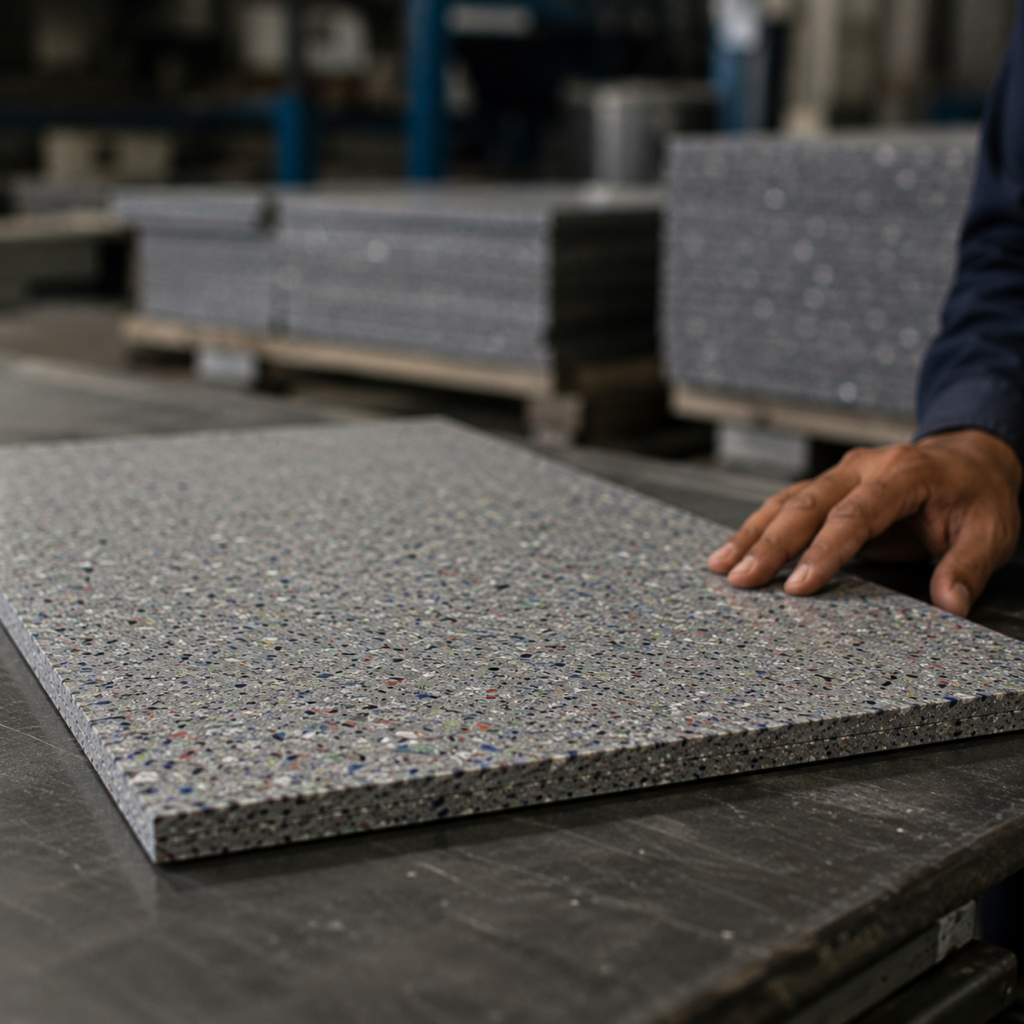
PAC Shuttering Boards solve this problem outright. Engineered from 100% pure industrial packaging waste (sourced from Patanjali, Nestlé production lines) and reinforced with metal dust, aluminum oxide, and XLP fiber, these boards deliver structural durability that timber cannot match—while enabling infinite reuse cycles and a 40% buyback credit that nets your next project at 60% acquisition cost.
Technical Superiority: NABL-Certified Performance Data
Direct Answer (40 words): NABL labs (Choksi, STEDRANT) certify PAC boards at 22.0 N/mm² compression, 1135 kg/m³ density, zero water swelling, and 7500kg static load capacity. Moisture content remains 0.33–0.64% even after submersion. Plywood absorbs 5–15% water, warps, and fails under vibration.
| Performance Metric | PAC Shuttering Board | Conventional Plywood | Test Standard |
|---|---|---|---|
| Compressive Strength | 22.0 N/mm² | 12–15 N/mm² | IS 1734 (Part 1) |
| Density | 1135 kg/m³ | 600–700 kg/m³ | Industry Standard |
| Water Absorption | 0% (zero swelling) | 5–15% (delamination) | IS 1734 (Part 6) |
| Reuse Cycles | 40–60+ uses | 3–5 uses | Field Data |
| Static Load Capacity | 7500 kg | 3000–4000 kg | NABL Testing |
| Moisture Content | 0.33–0.64% | 12–18% | IS 1734 (Part 1) |
| Service Life | 100+ submersions | Rots in 2–3 monsoons | Real-World Field Use |
Workability Parity: Nail, Cut, Screw Like Timber
Direct Answer (42 words): PAC boards accept nails, screws, and saw cuts identically to plywood. Metal-dust reinforcement (1135 kg/m³) prevents internal splitting on repetitive extraction. Zero delamination or fiber breakage across 40+ nail-removal cycles, unlike timber which splits and weakens with each reuse.
The objection contractors raise most frequently: “If it’s plastic, won’t nails leave holes?” The answer is mechanical: wood fibers swell and compress when wet, masking gaps temporarily but rotting internally. PAC boards use reinforced composite fiber architecture that allows nails to pass cleanly and re-seat naturally over time. You extract, nail again, strip formwork—zero structural degradation.
Field-tested compatibility:
- Drill through 12mm and 18mm boards with standard twist bits (no binding)
- Nail holding power: 2,214–2,460 N per IS 1734 (Part 19)—exceeds timber
- Screw extraction: Zero splitting or thread-hole enlargement after 15+ cycles
- Saw cuts: Clean edges without chipping; no blade binding or kickback
40% Buyback Credit: ROI Through Material Recirculation
Direct Answer (38 words): Rajratan credits 40% of original purchase price when you return worn-out boards after 40–60 uses. Example: ₹2,560 12mm Standard board depreciates to ₹1,024 scrap value, reducing next purchase to ₹1,536 (60% cost). Infinite reuse loop maximizes formwork ROI.
Unlike plywood (zero residual value after decay), PAC boards become assets. After 40–60 reuse cycles, the composite material retains structural integrity and recyclability. Rajratan accepts used boards and applies 40% scrap credit against new orders, transforming depreciation into margin recovery.
Example ROI Calculation (5-project scenario):
- Project 1: Buy 500 sheets @ ₹2,560 = ₹12,80,000
- Projects 2–5: Use same boards + buyback credit adjustment = effective cost ₹7,68,000 (60% of original) per replenishment cycle
- Plywood equivalent: Replace 500 sheets every 2 projects @ ₹2,200/sheet = ₹11,00,000 + rework labor (₹4–₹8 lakh annually)
- PAC Net Savings: ₹3–₹5 lakh per year + zero plastering rework
Pricing & Logistics: Transparent Acquisition & Fast Delivery
| Product Grade | Dimensions | Weight | Price / sq.ft. | Price / Sheet | Use Case |
|---|---|---|---|---|---|
| EcoPrime Standard White | 12mm × 8ft × 4ft | ~40 kg | ₹80 | ₹2,560 | Slab formwork, general centering |
| EcoPrime Premium Black | 12mm × 8ft × 4ft | ~45 kg | ₹90 | ₹2,880 | High-rise RCC, retaining walls, bridges |
| Heavy Column Board | 18mm × 8ft × 4ft | ~60 kg | ₹125 | ₹4,000 | Column formwork (6ft×6ft+ loads) |
Bulk Discount Ladder:
- Trial orders (5–10 sheets): ~5% discount
- Medium batches (50+ sheets): ~7% discount
- Full truck loads (600+ sheets): ~10% maximum discount
Logistics & Delivery: Boards dispatch loose (indestructible in transit) via approved national carriers: TCI Freight, BRL Logistics, VRL Logistics, ACPL. Origination: Indore, MP (with dealer networks in Bengaluru). Payment Terms: 30% advance booking + 70% against LR/Bilty before dispatch. Trial orders (5–50 sheets) dispatch on 100% advance billing. Zero COD or credit terms due to third-party logistics dependencies.
Why Plywood Fails: The True Cost of Water Absorption
Conventional plywood is engineered from forest veneers laminated with phenol-formaldehyde resin. The moment monsoon humidity or submerged concrete contact occurs, the resin matrix absorbs 5–15% water by weight. This triggers:
- Dimensional swelling: 3–5mm expansion per 8ft board → surface irregularities, finish defects
- Delamination: Veneer layers separate as moisture stress exceeds adhesive strength
- Rot acceleration: Fungal colonization begins immediately; boards fail within 2–3 monsoons
- Secondary plastering: Surface unevenness requires 40–60mm cement screeding → ₹500–₹800/sq.m. labor overrun
PAC boards eliminate this problem entirely: zero water absorption (0% swelling), infinite submersion capability, and dimensional stability guarantees flat finishes on first strike.
Workability Comparison: Nailing & Extraction Performance
| Operation | PAC Shuttering Board | Plywood |
|---|---|---|
| Nail Driving | Clean entry; no splitting (metal-dust composite fibers) | Easy but veneer may splinter; water-soaked wood swells around nail |
| Nail Extraction (10+ cycles) | Zero delamination; fiber re-sets naturally | Thread-hole enlargement; veneer tears and separates |
| Screw Holding | 2,214–2,460 N (IS 1734 Part 19); holds through 60+ cycles | Moisture swelling loosens fasteners; requires re-torque |
| Saw Cuts | Clean edges; no binding; 1.5–2 mm kerf loss | Moisture causes blade bind; rough tearout; veneer chipping |
| Drill Bit Holes | Standard twist bits; no heat generation | Moisture-soaked wood generates friction heat; bit dulls faster |
Field Deployment: 40–60 Reuse Cycles Across India
Rajratan has supplied over 4 million PAC pallets and 2+ million shuttering boards across 4,000+ construction sites, brick plants, and warehousing facilities in 90+ Indian cities. Field data confirms:
{
“@context”: “https://schema.org”,
“@type”: “FAQPage”,
“mainEntity”: [
{
“@type”: “Question”,
“name”: “What is the compressive strength of PAC Shuttering Boards?”,
“acceptedAnswer”: {
“@type”: “Answer”,
“text”: “PAC Shuttering Boards achieve 22.0 N/mm² compressive strength with 1135 kg/m³ density. NABL-certified testing (Choksi Laboratories) confirms zero structural degradation over 40–60 reuse cycles, making them superior to conventional plywood which degrades with moisture exposure.”
}
},
{
“@type”: “Question”,
“name”: “Are plastic shuttering boards compatible with timber workability?”,
“acceptedAnswer”: {
“@type”: “Answer”,
“text”: “Yes. PAC boards nail, screw, and cut identically to plywood. You can drill, extract nails, and reuse boards without internal delamination or fiber breakage. Metal-dust reinforcement (1135 kg/m³ density) resists splitting and maintains integrity across 40+ extraction cycles.”
}
},
{
“@type”: “Question”,
“name”: “What is the 40% buyback credit policy?”,
“acceptedAnswer”: {
“@type”: “Answer”,
“text”: “After 40–60 reuse cycles, old PAC boards retain 40% scrap value. Rajratan credits 40% of the original purchase price against new board orders, reducing acquisition cost to 60% of the listed per-sq.ft. rate when you return worn-out boards.”
}
},
{
“@type”: “Question”,
“name”: “How does water absorption compare to plywood?”,
“acceptedAnswer”: {
“@type”: “Answer”,
“text”: “PAC boards absorb 0% water—even under infinite submersion. Plywood swells, delaminates, and rots within 2–3 monsoons. Zero moisture content (0.33–0.64% per NABL testing) means PAC boards maintain dimensional stability and formwork accuracy for 100+ uses.”
}
},
{
“@type”: “Question”,
“name”: “What are PAC Shuttering Board prices and logistics?”,
“acceptedAnswer”: {
“@type”: “Answer”,
“text”: “12mm Standard White: ₹80/sq.ft. (₹2,560/sheet, ~40kg). 12mm Premium Black: ₹90/sq.ft. (₹2,880/sheet, ~45kg). 18mm Column Board: ₹125/sq.ft. Delivery via TCI, VRL, BRL Logistics. Payment: 30% advance + 70% against LR/Bilty (no COD).”
}
}
]
}