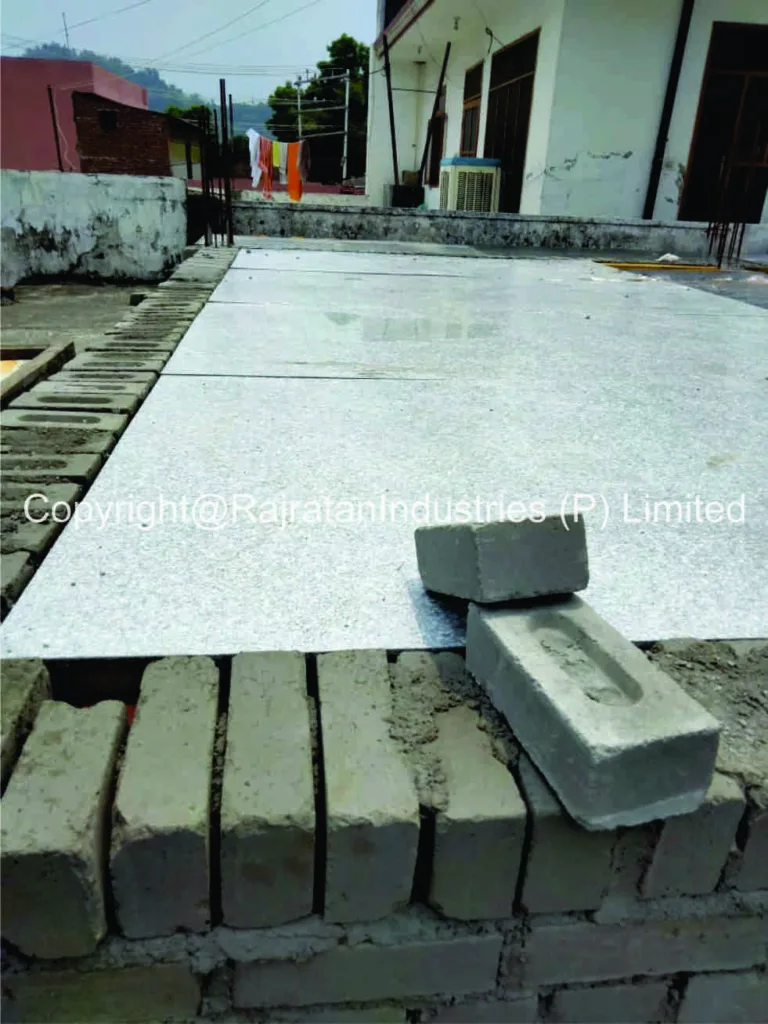
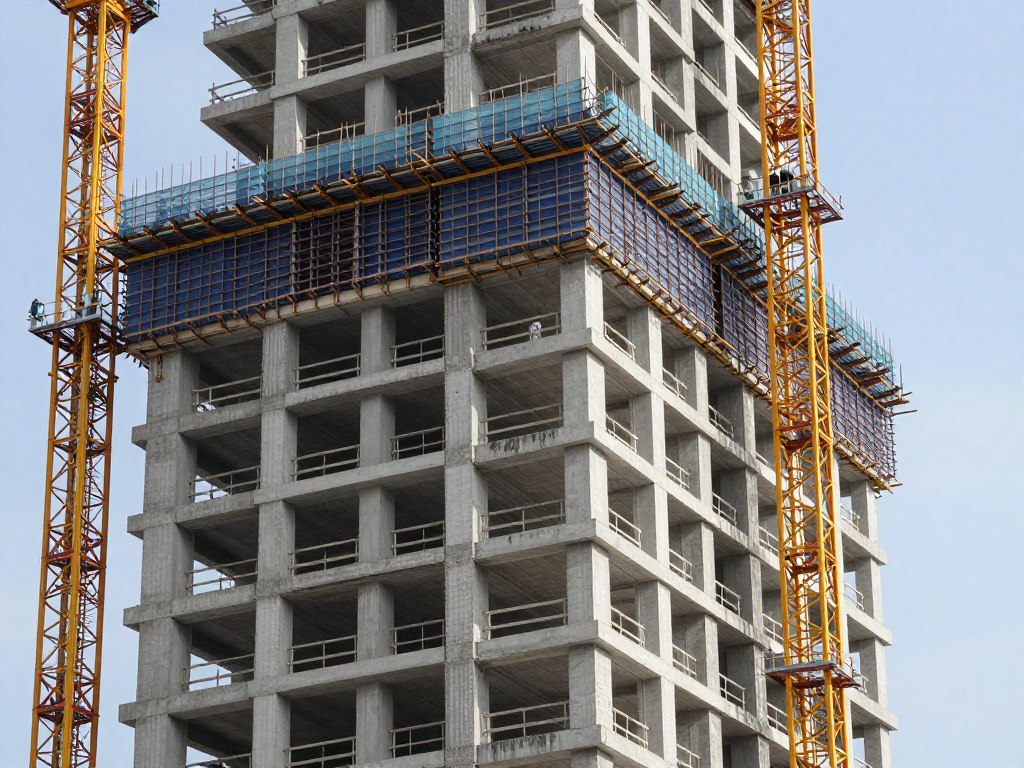
Summer construction brings additional challenges for contractors, particularly when temperatures rise above 40°C. High temperatures can affect formwork materials, concrete placement and overall site operations.
Traditional plywood can experience moisture-related swelling, surface deterioration and warping after repeated use. Plastic-based shuttering boards offer an alternative because of their resistance to water absorption and repeated-use potential.
However, plastic materials can also experience thermal expansion when exposed to changing temperatures. Therefore, proper installation, joint management and adequate support are important when using plastic shuttering boards during summer construction.
PAC® Shuttering Boards by Rajratan are manufactured using a composite of industrial-grade plastics, aluminium oxide and reinforcing materials. Their dense composite structure is designed to provide dimensional stability and durability across repeated formwork applications.
Understanding how temperature affects these boards and following suitable installation practices can help contractors maintain accurate formwork alignment during hot weather.
Understanding Thermal Expansion in Plastic Shuttering Boards
Thermal expansion refers to the change in a material’s dimensions when its temperature increases.
Like other materials, plastic-based shuttering boards can expand when exposed to heat and contract when temperatures decrease.
On construction sites, this becomes important when boards are installed during cooler morning hours and exposed to direct sunlight throughout the day.
If the boards are installed without considering thermal movement, tightly fitted joints may experience additional pressure. Depending on the material and support arrangement, this can contribute to joint movement or surface irregularities.
How Does PAC® Board Composition Help?
PAC® Shuttering Boards are manufactured using industrial-grade plastics such as PP, LDPE and HDPE, combined with aluminium oxide and cross-linked polymer (XLP) reinforcing materials.
The composite structure is designed to provide rigidity and reduce dimensional instability compared with conventional unreinforced plastic sheets.
Rajratan offers two ECOPRIME grades:
ECOPRIME Standard – Marble White
- Density: 1100 kg/m³.
- Plastic content: 60%.
- Aluminium oxide: 25%.
- XLP metals: 15%.
- Typical repetitions: 30–40.
ECOPRIME Premium – Marble Black
- Density: 1320 kg/m³.
- Plastic content: 52%.
- Aluminium oxide: 23%.
- XLP metals: 25%.
- Typical repetitions: 60–100+.
Comparison of Different Shuttering Materials
Material Property | ECOPRIME Standard | ECOPRIME Premium | Waterproof Plywood | Pure PVC Board |
Density | 1100 kg/m³ | 1320 kg/m³ | 650–700 kg/m³ | 700–900 kg/m³ |
Typical Repetitions | 30–40 | 60–100+ | 5–10 | 15–25 |
Water Resistance | Waterproof | Waterproof | Moisture-sensitive edges | Waterproof |
Surface Structure | Dense Composite | Dense Composite | Wood Veneers | PVC |
Indicative Price | ₹80/sq. ft. | ₹90/sq. ft. | ₹45–₹55/sq. ft. | ₹65–₹75/sq. ft. |
Buyback Credit | Up to 40% | Up to 40% | Not included | Not included |
All prices and reuse figures are indicative. Actual performance depends on product specifications, installation and site handling.
Step-by-Step Joint Gap Management During Summer Construction
Proper joint management is important when installing shuttering boards in changing temperatures.
The required joint clearance should be based on the manufacturer’s technical recommendations, board dimensions, temperature range and installation conditions. A fixed expansion gap should not be applied universally to every board or project.
Here are some important practices for summer formwork installation.
1. Check Board Temperature Before Installation
Before installing a plastic centering board, check its temperature and the surrounding site conditions.
Boards stored under direct sunlight may become considerably hotter than boards kept in shaded storage.
Allow the material to stabilise under suitable site conditions before fixing it into the formwork arrangement.
2. Plan Sheet Joints Carefully
Avoid forcing boards tightly into position when the installation conditions may lead to thermal movement.
Follow the manufacturer’s recommended joint clearance and installation procedure.
Proper joint planning helps minimise unwanted pressure between adjacent sheets and supports accurate slab alignment.
3. Seal Joints Against Concrete Slurry Leakage
Sheet joints should be sealed using a suitable formwork joint-sealing material.
Depending on the board and application, compatible PVC joint tape or another approved sealing solution can help prevent cement slurry from escaping through the joints.
Ensure the sealing material does not interfere with the required movement of the boards.
4. Provide Adequate Support for Beam Shuttering
Beam formwork experiences pressure from freshly placed concrete.
During summer construction, check that all supporting runners, battens and braces are properly positioned and secured.
The spacing of supports should be determined according to board thickness, concrete pressure, beam dimensions and the approved formwork design.
Do not reduce support spacing to a fixed measurement without checking the structural requirements.
5. Secure Column Shuttering Properly
Column formwork requires proper alignment and bracing to maintain the required dimensions during concrete placement.
Use suitable clamps, ties and external supports to prevent movement or separation of the column panels.
Check all connections before concrete pouring begins.
Plywood vs PAC® Formwork Board: Summer Performance and Cost
Summer conditions can affect different shuttering materials in different ways.
Plywood is sensitive to moisture exposure, particularly around damaged edges and fixing points. Repeated wetting and drying can contribute to swelling, delamination and deterioration.
PAC® Shuttering Boards offer an alternative through their non-porous composite construction, which resists water absorption.
Their higher reuse potential can also help reduce material replacement requirements across multiple projects.
Cost Comparison Over Multiple Uses
Consider the indicative material cost of each option:
Marine Plywood
- Approximate price: ₹50/sq. ft.
- Assumed usable repetitions: 5–10.
- Requires replacement as sheets deteriorate.
PAC® ECOPRIME Premium
- Approximate price: ₹90/sq. ft.
- Typical repetitions: 60–100+.
- Eligible for Rajratan’s 40% buyback credit programme.
For a fair comparison, contractors should consider the actual number of usable repetitions, cleaning expenses, maintenance, replacement requirements and applicable buyback conditions.
PAC® boards have a higher initial purchase price, but their potential for repeated use can reduce the material cost per application.
Practical Tips for Handling PAC® Boards During Summer
Proper handling and storage are important for maintaining shuttering board performance throughout the construction season.
1. Store Boards in a Suitable Location
Keep unused boards flat on a level and properly supported surface.
Avoid leaving individual sheets leaning against walls under prolonged direct sunlight.
2. Use Appropriate Fixing Methods
Use suitable nails, screws or other approved fasteners according to the manufacturer’s recommendations.
Maintain appropriate edge distances and avoid unnecessary impact during installation.
3. Check Board Alignment Before Concrete Pouring
Inspect the complete formwork arrangement before placing concrete.
Check sheet joints, support connections, beam panels and column alignment.
4. Use Suitable Release Agents
PAC® boards have a non-porous surface that resists water absorption.
A compatible concrete release agent may be used when required by the application. Avoid excessive application that could affect concrete finishing.
5. Clean Boards After Every Use
Remove concrete residue using suitable cleaning tools and manufacturer-approved cleaning solutions.
Inspect the sheets before storing them for the next application.
Testing PAC® Shuttering Boards on Your Construction Site
For contractors considering a change from conventional plywood to composite shuttering boards, a site trial can help evaluate the material under actual working conditions.
Rajratan offers trial orders of approximately 5–10 sheets for customers to assess product suitability.
During the trial, contractors can evaluate:
- Cutting and trimming performance.
- Fixing and nail-holding behaviour.
- Water resistance.
- Concrete release and surface finish.
- Cleaning and maintenance.
- Performance under different site temperatures.
A trial helps construction teams understand how the boards perform in their particular formwork arrangements before placing larger orders.
PAC® Shuttering Boards from Rajratan
Rajratan Industries Private Limited manufactures PAC® Shuttering Boards at its facility in Indore, Madhya Pradesh.
The ECOPRIME range is available in different grades and thicknesses for suitable construction applications, including slab, beam and column formwork.
The product range focuses on waterproof performance, dimensional stability and repeated-use potential.
Rajratan also offers a 40% buyback credit programme on eligible used PAC® boards, subject to applicable terms and conditions.
For product specifications, pricing, trial orders and availability, contact the Rajratan team.
Company: Rajratan Industries Private Limited
Address: 123–124, First Floor, Shastri Market, Opp. Gandhi Hall, Indore – 452007, Madhya Pradesh, India.
Phone: +91 9685727927
Email: info@rajratan.in
Website: https://shutteringboard.rajratan.in/
Frequently Asked Questions
1. Do plastic shuttering boards expand in summer?
Yes. Plastic-based materials can expand when exposed to higher temperatures. The amount of expansion depends on the material composition, board dimensions and temperature change.
2. Does PAC® Shuttering Board handle temperatures above 40°C?
PAC® boards are designed for demanding construction applications. Their performance under high-temperature conditions depends on the actual board temperature, support arrangement and application. Consult the manufacturer for verified operating-temperature specifications.
3. How should I manage gaps between plastic shuttering sheets?
Follow the manufacturer’s recommended joint clearance based on board dimensions and temperature conditions. Seal joints using compatible materials to prevent concrete slurry leakage.
4. Can PAC® boards be used for beam and column shuttering?
Yes. Suitable PAC® boards can be used for beam and column formwork, provided the selected thickness, fixing system and support arrangement meet the project requirements.
5. How many times can PAC® Shuttering Boards be reused?
ECOPRIME Standard offers approximately 30–40 repetitions, while ECOPRIME Premium offers approximately 60–100+ repetitions under suitable site conditions.
6. How should PAC® boards be stored during summer?
Store the sheets flat on a level, properly supported surface. Avoid prolonged uneven heating and unsupported vertical storage under direct sunlight.
7. Does Rajratan offer a buyback programme for old PAC® boards?
Yes. Rajratan offers a 40% buyback credit programme on eligible used boards. The applicable return conditions and credit terms should be confirmed with the company.
8. Can PAC® Shuttering Boards be used during monsoon and summer?
PAC® boards are designed to resist water absorption and are suitable for repeated construction applications in varying weather conditions. Proper installation, support and storage remain important.
Conclusion
High summer temperatures require careful planning of construction formwork, particularly when using plastic-based shuttering materials.
Understanding thermal movement, planning sheet joints, providing adequate support and following proper installation practices can help contractors maintain accurate formwork alignment.
PAC® Shuttering Boards by Rajratan offer waterproof performance, a dense composite structure and high reuse potential for suitable construction applications.
For contractors looking for an alternative to conventional plywood, PAC® boards provide an option worth evaluating for slab, beam and column formwork.
Explore PAC® Shuttering Boards by Rajratan for your next construction project.