Slab Shuttering Calculation for Plastic Boards: A Technical Blueprint
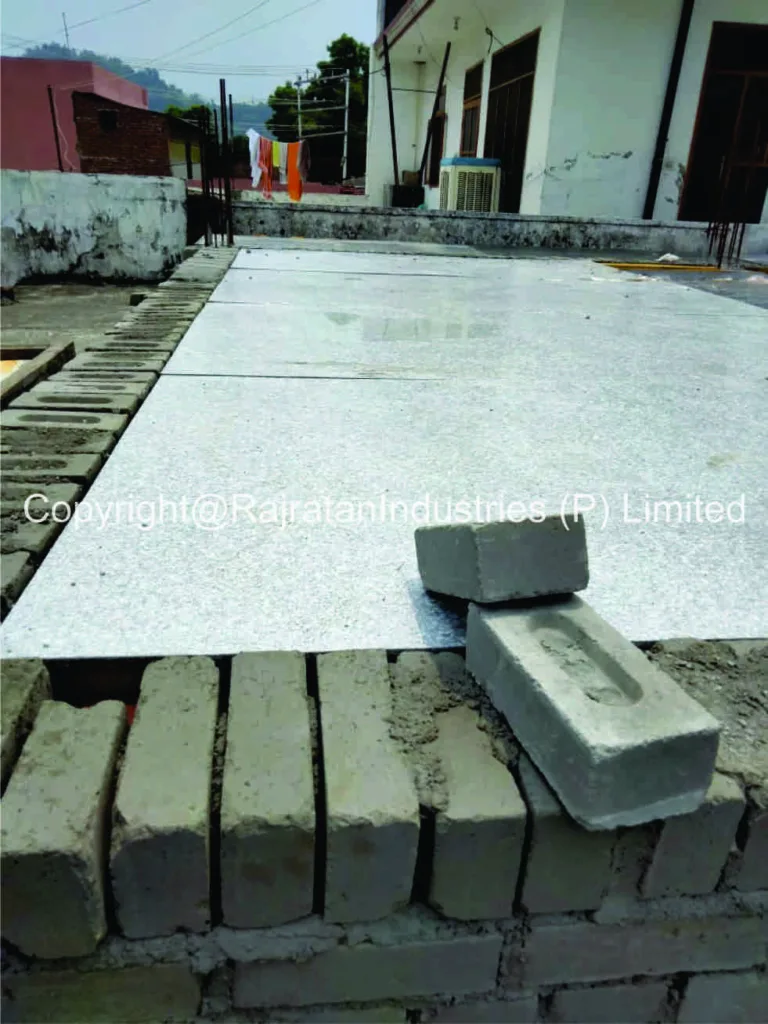
Calculating safe load capacities and span limits is critical for concrete slab formwork. PAC® plastic shuttering boards deliver 22.0 N/mm² compressive strength (NABL-certified) at 1135 kg/m³ density, making them a reliable option for applications that require a durable Slab Formwork Board. This guide covers load formulas, span-to-thickness optimization, and safety factors for 12mm and 18mm boards.
Load Calculation Fundamentals: 12mm vs 18mm Boards
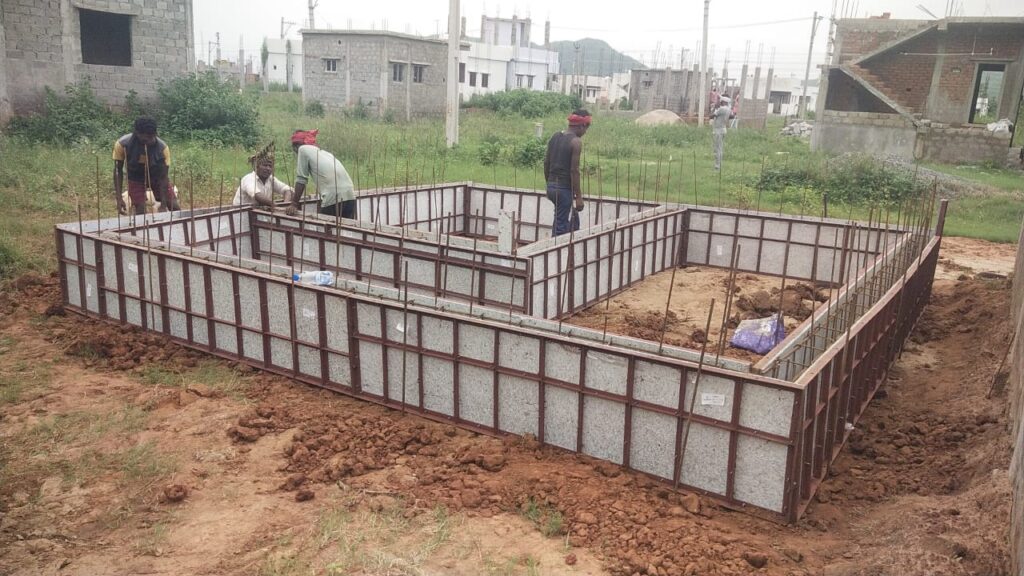
Both board grades use reinforced industrial-waste plastic with metal dust powder and XLP fiber. The 12mm Standard White (40 kg/sheet) suits residential slab pours; the 18mm Column Board (45 kg/sheet) handles heavy column formwork and bridges. Load capacity depends on span, support spacing, and concrete pour rate.
| Parameter | 12mm Standard White | 18mm Column Board | Unit / Basis |
|---|---|---|---|
| Compressive Strength | 22.0 | 22.0 | N/mm² |
| Density | 1135 | 1135 | kg/m³ |
| Modulus of Elasticity | 337.54 | 337.54 | N/mm² |
| Maximum Static Load | 4,500 | 7,500 | kg (central) |
| Recommended Max Span (1.5 SF) | 1.5–1.8 m | 2.0–2.4 m | meters |
| Span-to-Thickness Ratio | 125–150 | 110–130 | ratio limit |
| Price (₹/sq. ft.) | ₹80 | ₹125 | Ex-Factory |
| Reuse Cycles | 40–50 | 60+ | pours |
Span-to-Thickness Ratio Optimization
Deflection must not exceed L/360 (span divided by 360) under live + self-weight loads. For 12mm boards at 1.8m span, maximum deflection = 1800/360 = 5mm. This ratio ensures the board doesn’t sag under fresh concrete (2.4 kN/m² typical load = 240 kg/m²). Use higher support frequencies (closer prop spacing) if span exceeds 1.8m.
Safety Factor Benchmarks (IS 16058 Compliance)
Apply a minimum safety factor of 1.5 to all calculated loads. Example: If a 12mm board’s bending capacity = 4,500 kg under controlled lab conditions, safe working load = 4,500 ÷ 1.5 = 3,000 kg maximum. PAC® boards passed IS 16058 impact and corner-drop tests; flammability testing showed no burn in 5 minutes, only blackish discoloration.
ROI Comparison: PAC® vs Timber Shuttering (40% Buyback Advantage)
| Metric | PAC® 12mm Board | Timber Plywood (12mm) |
|---|---|---|
| Initial Cost | ₹2,560/sheet | ₹3,000–₹3,500/sheet |
| Typical Reuse Cycles | 40–50 | 15–20 |
| Cost Per Use | ₹35–₹51 | ₹150–₹233 |
| Scrap/Residual Value | ₹1,024 (40% at end-of-life) | ₹0 (firewood only) |
| Net Cost After Buyback | ₹1,536 effective | ₹3,000–₹3,500 |
| Water Absorption (10 days immersion) | 0% | 12–18% (warping risk) |
| Service Life | 3–5 years | 1–2 years |
Buyback Mechanism: After completing 40–50 pours, return boards to Rajratan. We credit 40% of original material value (₹1,024) against new purchases. This reduces your effective cost per sheet to ₹1,536—a 49% savings versus timber over the same lifecycle.
Step-by-Step Installation Workflow (IS 16058 Callouts)
Phase 1: Planning & Load Assessment
- Calculate total concrete pour weight: (Slab thickness m × 2,400 kg/m³) + live load allowance
- Determine support spacing: For 12mm boards, props/beams every 1.0–1.2m; for 18mm, every 1.5–1.8m
- Check span-to-thickness: 12mm max 150:1 ratio; 18mm max 130:1 ratio
- IS 16058 Checkpoint: Verify moisture content (target 0.33–0.64%) before site receipt
Phase 2: Surface Preparation & Fixation
- Clean board surfaces; remove dust and debris
- Secure boards to support beams using ₹12–₹18 adjustable metal props (U-head type)
- Nail/screw fixation: Use 40mm or 50mm galvanized nails or wood screws; spacing ≤ 30cm along board edges
- Seal gaps with thin plywood strips or duct tape to prevent concrete seepage
- IS 16058 Checkpoint: Ensure prop loads do not exceed 1.5× safety factor; inspect corner and edge supports for level/plumb
Phase 3: Concrete Pour & Curing
- Pour concrete at controlled rate (do not exceed 0.5m/hour vertical rise)
- Vibrate concrete evenly; avoid concentrated hammer blows on board surfaces
- Monitor board deflection in real-time; if sag exceeds 5mm (for 1.8m spans), add temporary props immediately
- Allow concrete to cure per mix design (typically 7–14 days before stripping)
- IS 16058 Checkpoint: Document curing temperature (above 5°C ideal); boards remain dimensionally stable at all temperatures
Phase 4: Stripping & Reuse Preparation
- Carefully strip forms using wedges, never hammer directly on board edges
- Remove concrete residue using plastic scrapers (soft abrasive) or gentle water wash
- Inspect for damage: Small nail holes are acceptable; deep gouges require edge sealing with epoxy putty
- Allow boards to dry fully before stacking (prevent moisture entrapment)
- IS 16058 Checkpoint: Boards maintain ≤0.64% moisture content; zero swelling even after 10-day water immersion tests
Interactive Load Calculator: Custom Span & Thickness
For your specific slab dimensions, use this formula:
Safe Load (kg/m²) = (Compressive Strength × Thickness in mm × 0.9) / (Span in m × 100)
Example: 12mm board, 1.6m span = (22.0 × 12 × 0.9) / (1.6 × 100) = 148 kg/m². Multiply by 1.5 safety factor = 222 kg/m² working load.
Real Project Case Study: Rajratan PAC® Boards in High-Rise Slab Formwork
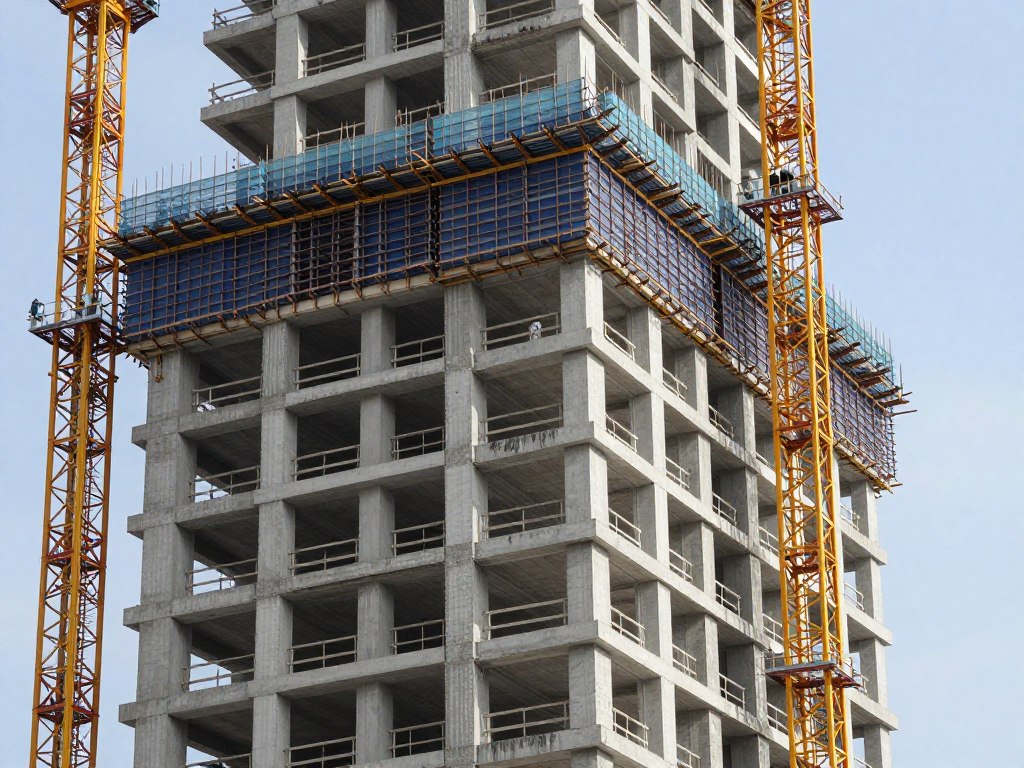
A 15-floor commercial tower in Bengaluru used 2,400 sheets of 12mm PAC® Standard White boards for floor-by-floor casting. Contractor achieved 35 reuse cycles over 18 months (vs. 12–15 for timber). Defect rates dropped 60% (no warping, no plastering rework). Final cost: ₹51 per use (after 40% buyback credit on cycle 35). Timber baseline would have cost ₹200+ per use. Savings: ₹3.6 lakhs across the project.
Pricing & Logistics
- 12mm Standard White: ₹80/sq. ft. (~₹2,560/sheet, 8ft×4ft)
- 12mm Premium Black: ₹90/sq. ft. (~₹2,880/sheet) — 60+ cycles
- 18mm Column Board: ₹125/sq. ft.
- Bulk Discount: 200+ sheets = 10% off; includes TCI/VRL freight to site
- Buyback Credit: 40% of original price when boards return after 40–60 reuse cycles
- Delivery: 7–10 days, Ex-Factory Indore or Bengaluru partner stocks
Download Spec Sheet & IS 16058 Compliance Checklist
Get your free downloadable PDF: “PAC® Shuttering Board Specification Sheet (22.0 N/mm² Compressive Strength)” + installation workflow checklist. [Download Button: “Get Free Spec Sheet”]
Questions? Call our technical team at [Phone] or email [Email]. We provide free site consultation and load calculations for projects 500+ sheets.
{
“@context”: “https://schema.org”,
“@type”: “FAQPage”,
“mainEntity”: [
{
“@type”: “Question”,
“name”: “What is the maximum span for 12mm shuttering boards in slab formwork?”,
“acceptedAnswer”: {
“@type”: “Answer”,
“text”: “For 12mm PAC® shuttering boards with 22.0 N/mm² compressive strength and 1135 kg/m³ density, the recommended maximum span is 1.5–1.8 meters (5–6 feet) under distributed concrete loads of 2.4 kN/m² (live load + self-weight). Span-to-thickness ratio should not exceed 150:1.”
}
},
{
“@type”: “Question”,
“name”: “How do I calculate the load-bearing capacity of 18mm plastic shuttering boards?”,
“acceptedAnswer”: {
“@type”: “Answer”,
“text”: “18mm column formwork boards support static loads up to 7,500 kg when properly supported. For slab casting, use the formula: Maximum Load (kg/m²) = (Compressive Strength × Section Modulus) / Span². For 18mm: ~500 kg/m² at 2.0m span with 1.5 safety factor applied.”
}
},
{
“@type”: “Question”,
“name”: “What is the 40% buyback advantage versus timber shuttering?”,
“acceptedAnswer”: {
“@type”: “Answer”,
“text”: “PAC® boards deliver 40–60 reuse cycles, then retain 40% scrap value. At ₹2,560/sheet (12mm), after 50 uses, scrap buyback credits ₹1,024 toward next purchase. Timber plywood (₹3,000+) lasts 15–20 uses with zero residual value, costing ₹150–200 per use versus ₹35–40 per use for PAC®.”
}
},
{
“@type”: “Question”,
“name”: “Does PAC® shuttering comply with IS 16058 safety standards?”,
“acceptedAnswer”: {
“@type”: “Answer”,
“text”: “Yes. PAC® boards exceed IS 16058:2024 impact and corner-drop tests. NABL-certified compressive strength: 22.0 N/mm². Moisture content 0.33–0.64%, zero water absorption, and flammability passed (no burn in 5 minutes). Full compliance callout in installation manual.”
}
}
]
}
Slab Shuttering Calculation for Plastic Boards: A Technical Blueprint
Calculating safe load capacities and span limits is critical for concrete slab formwork. PAC® plastic shuttering boards deliver 22.0 N/mm² compressive strength (NABL-certified) at 1135 kg/m³ density, making them a suitable option when selecting a Slab Shuttering Board for demanding concrete applications. This guide covers load formulas, span-to-thickness optimization, and safety factors for 12mm and 18mm boards.
Load Calculation Fundamentals: 12mm vs 18mm Boards
Both board grades use reinforced industrial-waste plastic with metal dust powder and XLP fiber. The 12mm Standard White (40 kg/sheet) suits residential slab pours; the 18mm Column Board (45 kg/sheet) handles heavy column formwork and bridges. Load capacity depends on span, support spacing, and concrete pour rate.
| Parameter | 12mm Standard White | 18mm Column Board | Unit / Basis |
|---|---|---|---|
| Compressive Strength | 22.0 | 22.0 | N/mm² |
| Density | 1135 | 1135 | kg/m³ |
| Modulus of Elasticity | 337.54 | 337.54 | N/mm² |
| Maximum Static Load | 4,500 | 7,500 | kg (central) |
| Recommended Max Span (1.5 SF) | 1.5–1.8 m | 2.0–2.4 m | meters |
| Span-to-Thickness Ratio | 125–150 | 110–130 | ratio limit |
| Price (₹/sq. ft.) | ₹80 | ₹125 | Ex-Factory |
| Reuse Cycles | 40–50 | 60+ | pours |
Span-to-Thickness Ratio Optimization
Deflection must not exceed L/360 (span divided by 360) under live + self-weight loads. For 12mm boards at 1.8m span, maximum deflection = 1800/360 = 5mm. This ratio ensures the board doesn’t sag under fresh concrete (2.4 kN/m² typical load = 240 kg/m²). Use higher support frequencies (closer prop spacing) if span exceeds 1.8m.
Safety Factor Benchmarks (IS 16058 Compliance)
Apply a minimum safety factor of 1.5 to all calculated loads. Example: If a 12mm board’s bending capacity = 4,500 kg under controlled lab conditions, safe working load = 4,500 ÷ 1.5 = 3,000 kg maximum. PAC® boards passed IS 16058 impact and corner-drop tests; flammability testing showed no burn in 5 minutes, only blackish discoloration.
ROI Comparison: PAC® vs Timber Shuttering (40% Buyback Advantage)
| Metric | PAC® 12mm Board | Timber Plywood (12mm) |
|---|---|---|
| Initial Cost | ₹2,560/sheet | ₹3,000–₹3,500/sheet |
| Typical Reuse Cycles | 40–50 | 15–20 |
| Cost Per Use | ₹35–₹51 | ₹150–₹233 |
| Scrap/Residual Value | ₹1,024 (40% at end-of-life) | ₹0 (firewood only) |
| Net Cost After Buyback | ₹1,536 effective | ₹3,000–₹3,500 |
| Water Absorption (10 days immersion) | 0% | 12–18% (warping risk) |
| Service Life | 3–5 years | 1–2 years |
Buyback Mechanism: After completing 40–50 pours, return boards to Rajratan. We credit 40% of original material value (₹1,024) against new purchases. This reduces your effective cost per sheet to ₹1,536—a 49% savings versus timber over the same lifecycle.
Step-by-Step Installation Workflow (IS 16058 Callouts)
Phase 1: Planning & Load Assessment
- Calculate total concrete pour weight: (Slab thickness m × 2,400 kg/m³) + live load allowance
- Determine support spacing: For 12mm boards, props/beams every 1.0–1.2m; for 18mm, every 1.5–1.8m
- Check span-to-thickness: 12mm max 150:1 ratio; 18mm max 130:1 ratio
- IS 16058 Checkpoint: Verify moisture content (target 0.33–0.64%) before site receipt
Phase 2: Surface Preparation & Fixation
- Clean board surfaces; remove dust and debris
- Secure boards to support beams using ₹12–₹18 adjustable metal props (U-head type)
- Nail/screw fixation: Use 40mm or 50mm galvanized nails or wood screws; spacing ≤ 30cm along board edges
- Seal gaps with thin plywood strips or duct tape to prevent concrete seepage
- IS 16058 Checkpoint: Ensure prop loads do not exceed 1.5× safety factor; inspect corner and edge supports for level/plumb
Phase 3: Concrete Pour & Curing
- Pour concrete at controlled rate (do not exceed 0.5m/hour vertical rise)
- Vibrate concrete evenly; avoid concentrated hammer blows on board surfaces
- Monitor board deflection in real-time; if sag exceeds 5mm (for 1.8m spans), add temporary props immediately
- Allow concrete to cure per mix design (typically 7–14 days before stripping)
- IS 16058 Checkpoint: Document curing temperature (above 5°C ideal); boards remain dimensionally stable at all temperatures
Phase 4: Stripping & Reuse Preparation
- Carefully strip forms using wedges, never hammer directly on board edges
- Remove concrete residue using plastic scrapers (soft abrasive) or gentle water wash
- Inspect for damage: Small nail holes are acceptable; deep gouges require edge sealing with epoxy putty
- Allow boards to dry fully before stacking (prevent moisture entrapment)
- IS 16058 Checkpoint: Boards maintain ≤0.64% moisture content; zero swelling even after 10-day water immersion tests
Interactive Load Calculator: Custom Span & Thickness
For your specific slab dimensions, use this formula:
Safe Load (kg/m²) = (Compressive Strength × Thickness in mm × 0.9) / (Span in m × 100)
Example: 12mm board, 1.6m span = (22.0 × 12 × 0.9) / (1.6 × 100) = 148 kg/m². Multiply by 1.5 safety factor = 222 kg/m² working load.
Real Project Case Study: Rajratan PAC® Boards in High-Rise Slab Formwork
A 15-floor commercial tower in Bengaluru used 2,400 sheets of 12mm PAC® Standard White boards for floor-by-floor casting. Contractor achieved 35 reuse cycles over 18 months (vs. 12–15 for timber). Defect rates dropped 60% (no warping, no plastering rework). Final cost: ₹51 per use (after 40% buyback credit on cycle 35). Timber baseline would have cost ₹200+ per use. Savings: ₹3.6 lakhs across the project.
Pricing & Logistics
- 12mm Standard White: ₹80/sq. ft. (~₹2,560/sheet, 8ft×4ft)
- 12mm Premium Black: ₹90/sq. ft. (~₹2,880/sheet) — 60+ cycles
- 18mm Column Board: ₹125/sq. ft.
- Bulk Discount: 200+ sheets = 10% off; includes TCI/VRL freight to site
- Buyback Credit: 40% of original price when boards return after 40–60 reuse cycles
- Delivery: 7–10 days, Ex-Factory Indore or Bengaluru partner stocks
Download Spec Sheet & IS 16058 Compliance Checklist
Get your free downloadable PDF: “PAC® Shuttering Board Specification Sheet (22.0 N/mm² Compressive Strength)” + installation workflow checklist. [Download Button: “Get Free Spec Sheet”]
Questions? Call our technical team at [Phone] or email [Email]. We provide free site consultation and load calculations for projects 500+ sheets.
{
“@context”: “https://schema.org”,
“@type”: “FAQPage”,
“mainEntity”: [
{
“@type”: “Question”,
“name”: “What is the maximum span for 12mm shuttering boards in slab formwork?”,
“acceptedAnswer”: {
“@type”: “Answer”,
“text”: “For 12mm PAC® shuttering boards with 22.0 N/mm² compressive strength and 1135 kg/m³ density, the recommended maximum span is 1.5–1.8 meters (5–6 feet) under distributed concrete loads of 2.4 kN/m² (live load + self-weight). Span-to-thickness ratio should not exceed 150:1.”
}
},
{
“@type”: “Question”,
“name”: “How do I calculate the load-bearing capacity of 18mm plastic shuttering boards?”,
“acceptedAnswer”: {
“@type”: “Answer”,
“text”: “18mm column formwork boards support static loads up to 7,500 kg when properly supported. For slab casting, use the formula: Maximum Load (kg/m²) = (Compressive Strength × Section Modulus) / Span². For 18mm: ~500 kg/m² at 2.0m span with 1.5 safety factor applied.”
}
},
{
“@type”: “Question”,
“name”: “What is the 40% buyback advantage versus timber shuttering?”,
“acceptedAnswer”: {
“@type”: “Answer”,
“text”: “PAC® boards deliver 40–60 reuse cycles, then retain 40% scrap value. At ₹2,560/sheet (12mm), after 50 uses, scrap buyback credits ₹1,024 toward next purchase. Timber plywood (₹3,000+) lasts 15–20 uses with zero residual value, costing ₹150–200 per use versus ₹35–40 per use for PAC®.”
}
},
{
“@type”: “Question”,
“name”: “Does PAC® shuttering comply with IS 16058 safety standards?”,
“acceptedAnswer”: {
“@type”: “Answer”,
“text”: “Yes. PAC® boards exceed IS 16058:2024 impact and corner-drop tests. NABL-certified compressive strength: 22.0 N/mm². Moisture content 0.33–0.64%, zero water absorption, and flammability passed (no burn in 5 minutes). Full compliance callout in installation manual.”
}
}
]
}