For contractors and site engineers, choosing the right shuttering material can directly affect construction quality, labour requirements, material consumption, and overall project cost. While plywood has traditionally been used for concrete formwork, repeated exposure to moisture, improper handling, and stripping can lead to swelling, warping, cracking, and deterioration.
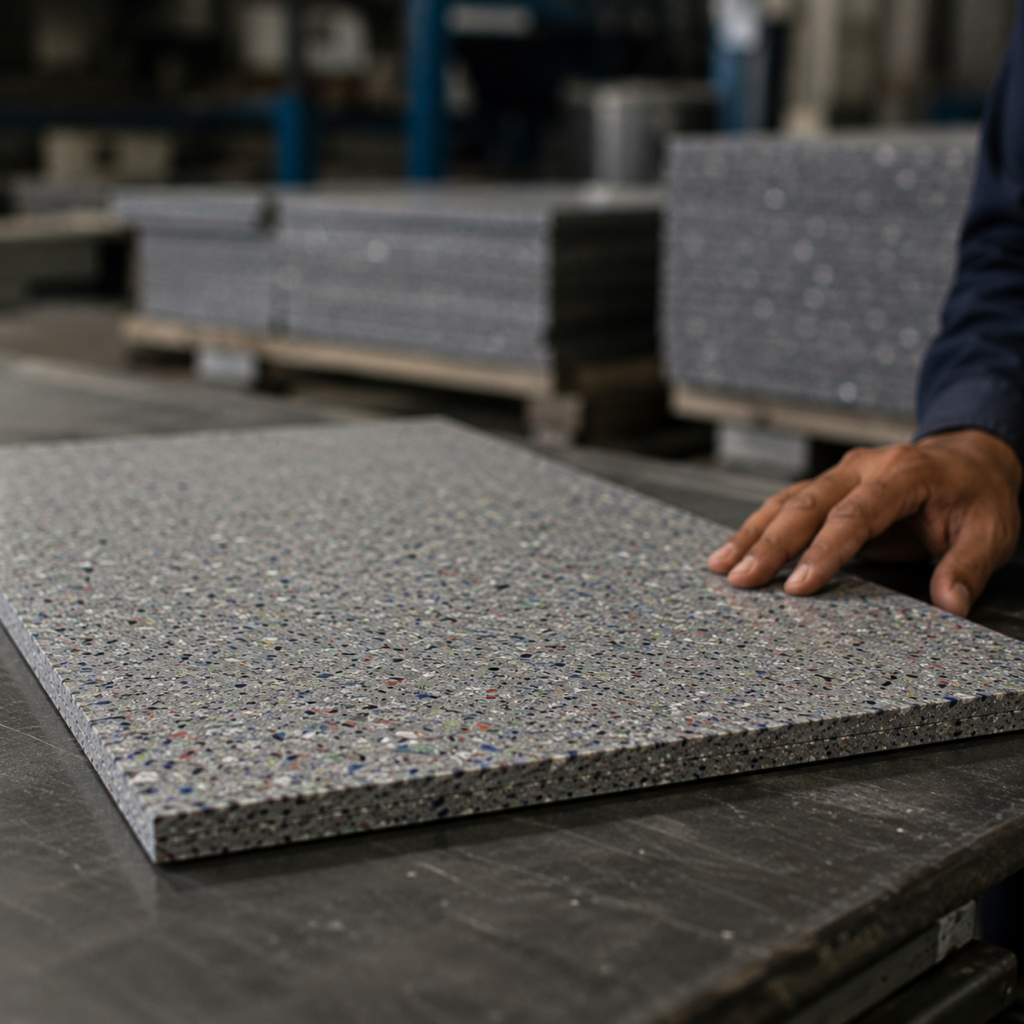
A PAC® Shuttering Board is a plastic-based formwork solution designed as an alternative to conventional plywood. Manufactured using industrial-grade plastics and mineral-based materials, PAC® boards are designed for repeated use while maintaining dimensional stability and a consistent surface finish.
Why Look Beyond Conventional Plywood?
Plywood can offer a low initial purchase price, but its overall economics depend heavily on how many usable repetitions it delivers.
Repeated exposure to wet concrete can affect plywood, particularly when edges and surfaces are not adequately protected. Damaged sheets may require replacement, increasing material consumption and generating additional waste.
This is where Plastic Shuttering Boards can offer a different approach.
Instead of evaluating a board only by its purchase price, contractors can consider its cost per usable repetition.
For example:
Cost per use = Purchase cost ÷ Number of usable repetitions
The more repetitions a board delivers, the lower its effective cost per use can become.
Understanding the PAC® Shuttering Board Advantage
PAC® Shuttering Boards are designed to provide dimensional stability in wet construction environments. Their non-porous surface helps reduce moisture-related swelling and makes the boards easier to clean and reuse.
Depending on the grade selected, PAC® boards can be used for different construction requirements.
Feature | ECOPRIME Standard | ECOPRIME Premium |
Typical Repetitions | 30–40 | 60+ |
Density | 1100 kg/m³ | 1320 kg/m³ |
Surface | Smooth, non-porous | Smooth, non-porous |
Suitable For | General RCC applications | Higher-repetition & demanding applications |
Actual repetitions depend on site conditions, handling, support spacing, stripping practices, and maintenance.
Why Plastic Centering Boards Can Be Useful on Construction Sites
One of the practical advantages of a Plastic Centering Board is its resistance to moisture.
Unlike porous wood-based materials, PAC® boards do not readily absorb water. This helps maintain the board’s dimensions during repeated exposure to wet concrete.
The smooth surface can also make cleaning and stripping easier. After use, the boards can be cleaned and prepared for the next cycle, subject to proper site handling.
For contractors, this can help reduce:
- Frequent replacement of damaged sheets
- Cleaning and preparation time
- Material waste
- Storage concerns related to moisture
- Variations caused by deteriorated formwork surfaces
PAC® Shuttering Board vs Plywood
The key difference is not simply “plastic versus wood.” It is how each material behaves throughout repeated construction cycles.
Factor | Conventional Plywood | PAC® Shuttering Board |
Moisture absorption | Can absorb moisture | Non-porous surface |
Swelling risk | Possible | Designed to resist swelling |
Warping | Can occur with moisture/exposure | Better dimensional stability |
Reusability | Depends on grade and handling | Designed for repeated use |
Cleaning | Can require more care | Easier to clean |
Concrete finish | Depends on surface condition | Smooth, consistent surface |
End-of-life | Generally discarded | Can be recovered through applicable recycling/buyback programs |
The actual performance of either material depends on application, workmanship, storage, support conditions, and handling.
How Many Times Can a PAC® Shuttering Board Be Reused?
Repetition is one of the most important factors when evaluating a shuttering board.
Rajratan’s ECOPRIME Standard is designed for approximately 30–40 repetitions, while ECOPRIME Premium is designed for 60+ repetitions under suitable site conditions.
Actual board life can vary depending on:
- Stripping methods
- Nail and screw usage
- Support spacing
- Cutting and drilling
- Storage conditions
- Exposure to excessive heat or sunlight
- Handling during transportation
- Cleaning and maintenance
Therefore, repetition claims should be considered as application-dependent rather than as a guaranteed number for every project.
Does PAC® Shuttering Board Require Shuttering Oil?
Yes. A suitable release agent should still be used according to the construction application and site practice.
Because PAC® has a smooth, non-porous surface, it can require less release-agent management than some conventional plywood applications. Proper application helps with easy stripping and contributes to maintaining the board surface over repeated cycles.
Can PAC® Boards Be Cut, Drilled and Fixed Like Plywood?
PAC® Shuttering Boards can be processed using commonly available construction tools, including cutting and drilling equipment.
However, proper handling is important. Excessive force, incorrect fixing methods, or unsuitable support arrangements can damage any formwork material.
Contractors should follow the recommended fixing, support, and handling practices for the selected PAC® board grade.
How the PAC® Buyback Program Supports Circularity
At the end of its useful service life, PAC® material can potentially be recovered instead of being treated simply as construction scrap.
Rajratan offers a 40% buyback/replacement program for eligible PAC® products, subject to applicable terms and conditions.
This approach supports a more circular material lifecycle:
Use → Reuse → Recover → Reprocess → New Product
For businesses using large quantities of formwork material, such recovery programs can also help reduce the amount of material going to conventional disposal routes.
Can You Test PAC® Shuttering Board Before a Larger Purchase?
Yes. A trial order can be a practical way for contractors to evaluate the material under their own site conditions.
A small quantity allows the site team to assess:
- Cutting and drilling
- Fixing methods
- Concrete release
- Surface finish
- Cleaning
- Handling
- Repetition performance
This is particularly useful because actual performance can vary depending on construction methods and site conditions.
Choosing the Right PAC® Shuttering Board
The right board should be selected based on the project’s requirements rather than simply choosing the highest specification.
Consider:
- Expected number of repetitions
- Type of RCC application
- Required concrete finish
- Support and spacing conditions
- Fixing and stripping methods
- Site handling practices
- Overall cost per repetition
For standard applications, ECOPRIME Standard may be considered. For projects where higher repetition and durability are priorities, ECOPRIME Premium may be more suitable.
Conclusion
The decision between plywood and plastic formwork should go beyond the initial purchase price.
A shuttering board’s real value comes from how it performs throughout its usable life—how many cycles it can deliver, how consistently it performs, how easily it can be cleaned and handled, and what happens to the material at the end of its service life.
PAC® Shuttering Board is designed to provide a durable, moisture-resistant alternative to conventional plywood for repeated concrete formwork applications.
For contractors looking to evaluate the material, a site-level trial can be the most practical way to compare performance and cost per repetition.
Frequently Asked Questions
Is PAC® Shuttering Board waterproof?
PAC® Shuttering Board has a non-porous plastic-based surface designed to resist water absorption. This helps reduce moisture-related swelling and dimensional changes associated with porous wood-based boards.
Can PAC® Shuttering Board be cut and drilled?
Yes. PAC® boards can be cut and drilled using commonly available construction tools. Proper handling and fixing practices should be followed to avoid unnecessary damage.
How many times can PAC® Shuttering Board be reused?
ECOPRIME Standard is designed for approximately 30–40 repetitions, while ECOPRIME Premium is designed for 60+ repetitions under suitable site conditions. Actual repetition depends on handling, application, support, stripping, and maintenance.
Does PAC® Shuttering Board require release oil?
Yes. A suitable release agent should be used as required for the application. The board’s smooth, non-porous surface can help simplify release-agent management compared with porous formwork materials.
Is PAC® Shuttering Board suitable for RCC work?
PAC® Shuttering Board is designed for concrete formwork applications, including RCC work. The appropriate grade should be selected according to the project’s structural, repetition, and site requirements.
Can I order a trial quantity?
A trial order can be used to evaluate PAC® Shuttering Board under actual site conditions before moving to a larger requirement. Contact Rajratan for current availability and trial-order options.