Introduction
When concrete is poured into columns, shear walls or retaining walls, it exerts horizontal pressure against the formwork. This force is known as lateral concrete pressure. If the shuttering system is not designed, supported or secured correctly, the panels may deflect, joints may open and cement slurry may leak out. These problems can affect the finished concrete surface and lead to additional repair work.
Selecting the right shuttering board is therefore an important part of formwork planning. The board material, thickness, support spacing, tie-rod arrangement and concrete placement method all influence formwork performance.
In this guide, we explain how lateral concrete pressure works, what factors affect it, and what contractors should consider when choosing PAC® Shuttering Boards for column and wall formwork.
1. What Is Lateral Concrete Pressure?
Lateral concrete pressure is the horizontal force exerted by fresh concrete on vertical formwork panels. Before concrete begins to set, it behaves partly like a fluid and pushes against the sides of the formwork.
Under a simplified hydrostatic model, pressure increases with the depth of the concrete. This means the lower sections of a tall column or wall may experience greater pressure than the upper sections.
The pressure experienced on-site also depends on factors such as concrete temperature, mix design, placement rate, consistency, setting time and vibration. The actual design pressure should be determined using the applicable formwork design method and project requirements.
2. Factors That Affect Lateral Concrete Pressure
Several site conditions influence the pressure that column and wall formwork must withstand.
Rate of Concrete Placement
When concrete is poured quickly, the lower layers may remain fluid while additional concrete is placed above them. This can increase the pressure acting on the formwork.
The placement rate should be controlled according to the formwork design, concrete characteristics and site conditions.
Height of the Concrete Pour
Taller columns and walls contain a greater depth of fresh concrete. Under hydrostatic conditions, pressure increases with depth, making the lower portion of the formwork particularly important to assess.
Concrete Mix and Density
Concrete density and mix characteristics affect lateral pressure. Highly workable mixes, including self-consolidating concrete, may maintain fluid behaviour for longer and require careful consideration during formwork design.
Vibration and Compaction
Concrete vibration helps remove trapped air and improve consolidation. However, vibration can temporarily increase pressure on formwork, depending on the placement conditions and vibration method.
Vibrators should be used according to the approved concreting procedure, avoiding unnecessary contact with the formwork and reinforcement.
Ambient Temperature and Setting Time
Temperature affects the rate at which concrete sets. In cooler conditions, concrete may remain fluid for longer, potentially influencing the pressure that develops during placement.
The expected setting behaviour should be considered when planning the pour and selecting the formwork system.
3. Why Formwork Deflection and Slurry Leakage Matter
Formwork must maintain its shape and remain securely connected throughout concrete placement.
If panels bend excessively or supports move, the resulting concrete element may have uneven dimensions or an irregular surface. Gaps between panels can also allow cement slurry to escape.
Possible consequences include:
- Bulging or misaligned column surfaces
- Cement slurry leakage at panel joints
- Honeycombing or other surface defects
- Additional patching, grinding and finishing work
- Delays caused by repair and rework
These problems cannot be prevented by board material alone. Correct panel installation, adequate support, suitable tie spacing and proper concrete placement are equally important.
4. Plywood vs PAC® Shuttering Boards
Conventional shuttering plywood and PAC® Shuttering Boards differ in material composition and moisture behaviour.
Plywood consists of bonded veneer layers. Depending on its grade, condition and exposure, repeated wetting and use may cause deterioration, swelling or delamination.
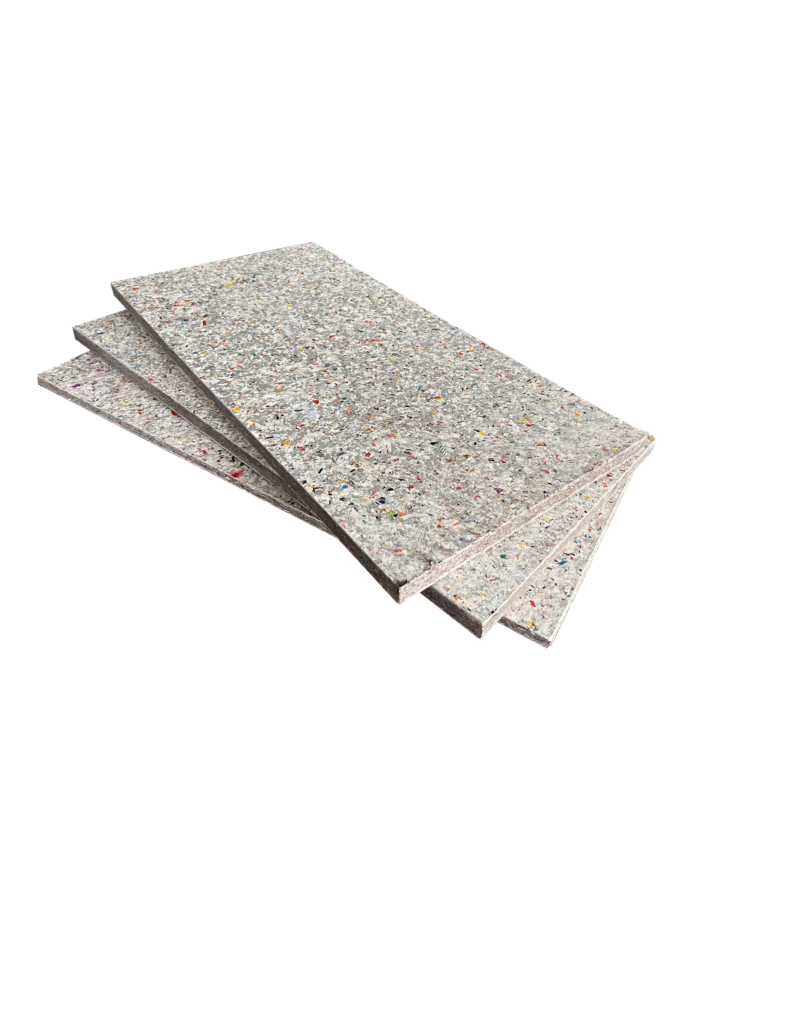
PAC® stands for Plastic Aluminium Composite. Rajratan PAC® Shuttering Boards use a composite material intended for construction applications. Their moisture performance and reuse potential should be assessed using the relevant product specifications and actual site conditions.
When comparing materials, contractors should consider more than the purchase price. Other important factors include:
- Board thickness and stiffness
- Support and tie-rod spacing
- Moisture exposure
- Fastening and handling requirements
- Concrete surface finish
- Maintenance and actual reuse
- Total cost over the board’s useful life
5. Choosing the Right PAC® Shuttering Board
Rajratan’s supplied product information describes three PAC® Shuttering Board options. The appropriate grade depends on the formwork design, required board dimensions, support arrangement and intended number of uses.
ECOPRIME Standard – 12 mm
- Colour: Marble White
- Listed density: 1,100 kg/m³
- Composition in supplied specifications: 60% industrial mixed plastic, 25% aluminium oxide and 15% XLP metals
- Indicative reuse: 30–40 uses
- Listed price: ₹80 per sq. ft.
This option may be considered for suitable residential formwork applications. Its suitability for a particular column height or pour rate must be confirmed against the formwork design.
ECOPRIME Premium – 12 mm
- Colour: Marble Black
- Listed density: 1,320 kg/m³
- Composition in supplied specifications: 52% industrial mixed plastic, 23% aluminium oxide and 25% XLP metals
- Indicative reuse: 60–100+ uses
- Listed price: ₹90 per sq. ft.
This grade is positioned as a higher-density option for repeated construction use. Contractors should confirm its load and deflection characteristics for the specific application before using it for tall columns or walls.
Heavy-Duty PAC® Shuttering Board – 18 mm
- Listed thickness: 18 mm
- Listed price: ₹125 per sq. ft.
- Intended applications: Certain heavy-duty formwork and infrastructure applications, subject to design requirements
A thicker board may provide different stiffness and bending characteristics, but thickness alone does not determine the safe load capacity of a formwork system. The board, support spacing, connections and concrete pressure must be assessed together.
Note: Prices, densities, composition details and reuse figures are based on the supplied product information and should be confirmed with Rajratan before purchase.
6. Technical Comparison: Plywood vs PAC® Shuttering Board
Parameter | Film-Faced Plywood | PAC® ECOPRIME Standard | PAC® ECOPRIME Premium | Heavy-Duty PAC® |
Listed thickness | 12 mm | 12 mm | 12 mm | 18 mm |
Listed density | Approx. 650 kg/m³ in supplied comparison | 1,100 kg/m³ | 1,320 kg/m³ | 1,300+ kg/m³ in supplied comparison |
Material | Wood veneer and resin | PAC® composite | PAC® composite | Reinforced PAC® composite |
Indicative reuse | 5–10 pours | 30–40 pours | 60–100+ pours | 100+ pours in supplied product information |
Moisture performance | Depends on grade and condition | Refer to product specifications | Refer to product specifications | Refer to product specifications |
Listed purchase price | ₹40–₹50 per sq. ft. in supplied comparison | ₹80 per sq. ft. | ₹90 per sq. ft. | ₹125 per sq. ft. |
These figures are indicative, not guaranteed results. Actual performance depends on installation, support spacing, handling, maintenance, concrete placement and site conditions. Confirm current specifications and prices before comparing products.
7. How to Manage Formwork Costs
The initial purchase price does not tell the whole story. The cost of formwork over a project also depends on the number of successful uses, maintenance, repairs, labour and end-of-life recovery value.
A simple way to calculate the board cost per use is:
Cost per use = Net board ownership cost ÷ Number of successful uses
For example, if a board costs ₹90 per sq. ft. and is successfully reused 60 times, its purchase cost alone works out to ₹1.50 per sq. ft. per use, before maintenance, handling, labour and other costs.
A realistic comparison should account for:
- Initial board purchase cost
- Number of successful pours
- Cleaning and maintenance
- Repair or replacement
- Handling and storage
- Any confirmed buyback or recovery value
Rajratan’s supplied product information also mentions a 40% buyback programme for eligible PAC® boards. Confirm the valuation basis and programme conditions with the company before including any buyback amount in a cost calculation.
8. Practical Tips for Column and Wall Formwork
Choosing a suitable shuttering board is only one part of achieving a stable formwork system. Good site practices remain essential.
Plan Tie-Rod and Support Spacing
Tie rods, clamps and supporting runners must be positioned according to the formwork design. Lower sections of tall columns may require closer support spacing because of the pressure distribution.
Do not determine tie-rod spacing using a generic rule alone. Follow the approved design and component specifications.
Control the Pouring Process
Follow the approved concrete placement rate and sequence. The permissible rate depends on concrete properties, formwork capacity and site conditions.
Use Suitable Tools and Fixings
Before cutting, drilling or fastening PAC® boards, check the manufacturer’s instructions. Use compatible fixings and ensure that the supporting framework is adequately designed.
Clean and Inspect Boards Between Uses
After stripping, clean the boards using a method approved by the manufacturer. Inspect the working surface, edges and fixing points before reusing them.
Avoid aggressive chemicals or cleaning methods unless the manufacturer confirms they are suitable.
Consider a Trial Order
Contractors switching from plywood to PAC® Shuttering Boards may consider a small trial order to evaluate handling, fastening, cleaning and concrete finish under their actual working conditions.
9. Ordering and Enquiries with Rajratan
Rajratan Industries Private Limited manufactures PAC® products in Indore, Madhya Pradesh.
For current product specifications, pricing, trial orders, delivery arrangements and dealer enquiries, contact the team directly.
Phone: +91 9685727927
Email: info@rajratan.in
Product website: Rajratan PAC® Shuttering Boards
Address: 123–124, First Floor, Shastri Market, Opp. Gandhi Hall, Indore – 452007, Madhya Pradesh, India.
Frequently Asked Questions
1. What is lateral concrete pressure?
Lateral concrete pressure is the horizontal force that fresh concrete exerts on vertical formwork panels. It depends on concrete depth and other factors, including mix characteristics, placement rate, temperature and setting behaviour.
2. Why is pressure often higher near the bottom of a column?
Under a simplified hydrostatic model, pressure increases with depth. As a result, the lower portion of a column form may experience greater pressure than the upper portion while the concrete remains fluid.
3. Can a thicker shuttering board prevent column bulging?
Thickness can influence board stiffness, but it does not guarantee that bulging will be prevented. Board material, support spacing, tie rods, connections and concrete placement conditions must all be considered in the formwork design.
4. How do you reduce the risk of slurry leakage?
Ensure that panel joints are properly fitted and sealed, fixings are secure, and the formwork is aligned correctly. Inspect the complete system before pouring.
5. How many times can PAC® Shuttering Boards be reused?
The supplied Rajratan product information lists 30–40 uses for ECOPRIME Standard and 60–100+ uses for ECOPRIME Premium. Actual reuse depends on site conditions, handling, maintenance and the condition of the boards.
6. Can PAC® Shuttering Boards be used for tall columns?
Their suitability depends on the board specifications and the design of the complete formwork system. For tall columns and walls, confirm board capacity, support spacing, tie-rod arrangement and permissible concrete placement rate with the responsible engineer.
7. How can contractors compare plywood and PAC® board costs?
Compare the net purchase cost per square foot with the actual number of successful uses. Include maintenance, repairs, labour, handling and any verified recovery or buyback value to estimate the cost per use.
8. Does Rajratan offer a buyback programme?
The supplied product information mentions a 40% buyback programme for eligible PAC® boards. Contact Rajratan to confirm the current terms, valuation basis and eligibility requirements.
Conclusion
Lateral concrete pressure is an important consideration when planning column and wall formwork. Understanding how pressure changes during concrete placement helps contractors evaluate board selection, support spacing, tie-rod arrangements and pouring procedures.
PAC® Shuttering Boards offer an alternative to conventional plywood for suitable construction applications. However, safe performance depends on choosing the correct product and using it as part of a properly designed and installed formwork system.
Planning your next column or wall casting project? Explore Rajratan PAC® Shuttering Boards or contact the team to discuss your requirements