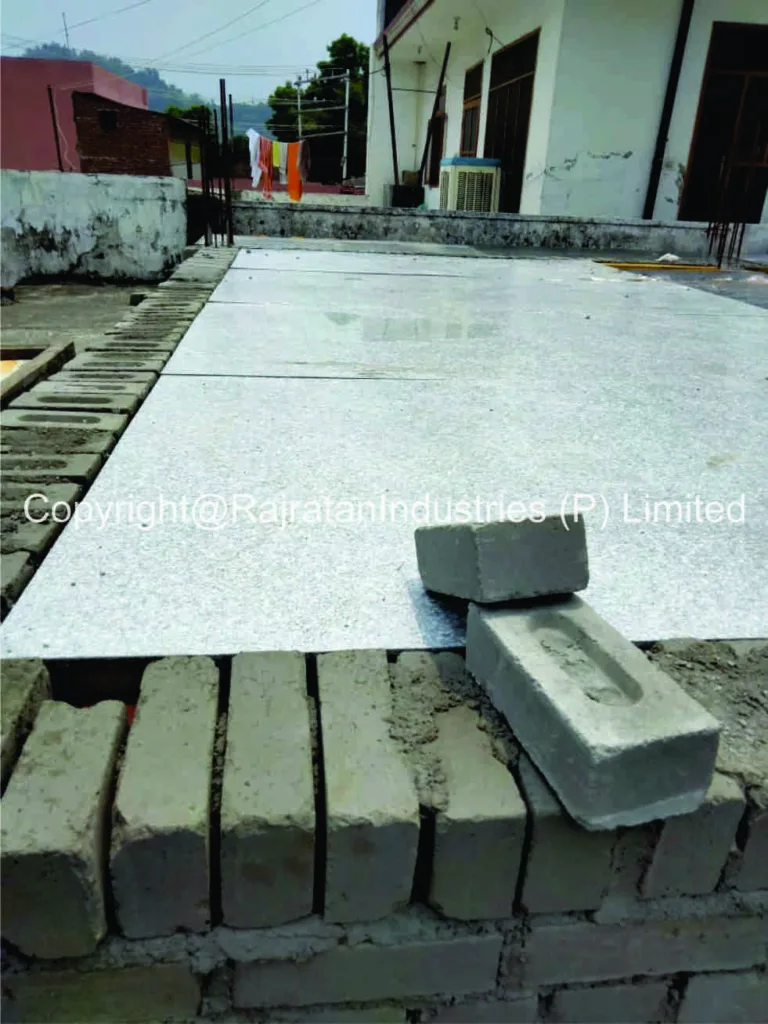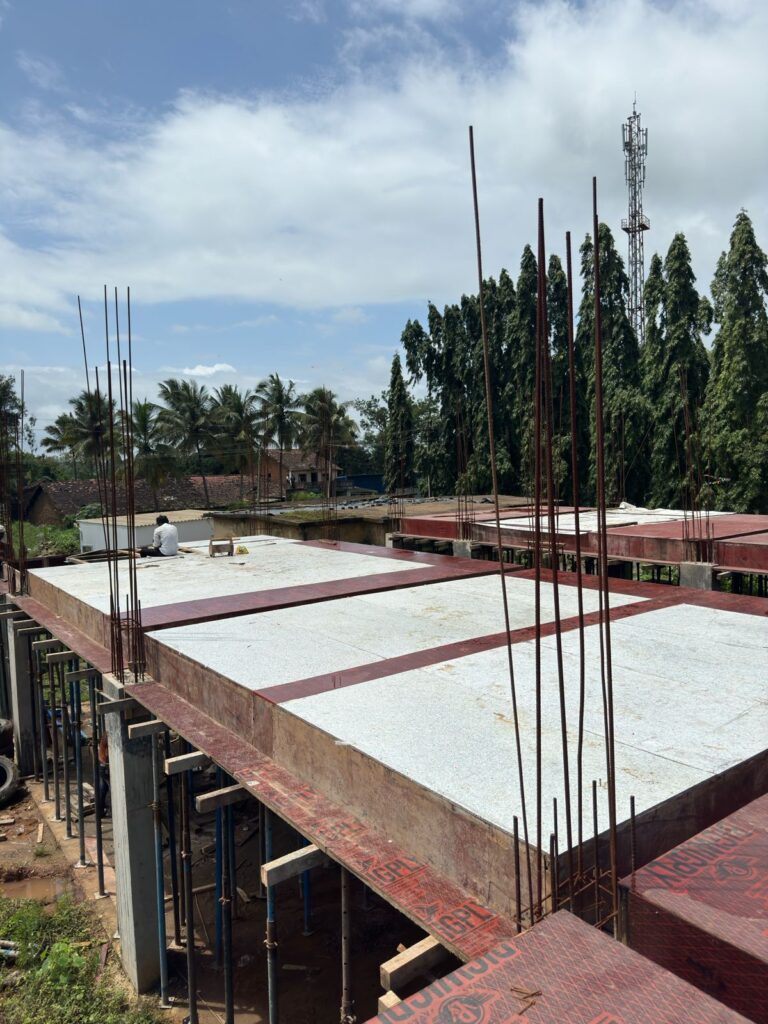
Why Formwork Deflection Matters: The Hidden Cost of Plywood on Heavy Concrete Pours
Formwork deflection—the downward sag of shuttering under wet concrete load—directly impacts surface finish quality, structural safety, and rework costs. Indian Building Code IS 456:2000 limits deflection to L/270 for flat slabs and L/180 for beams. Plywood boards can exceed these limits after 3–5 uses, potentially requiring costly re-plastering. PAC® Shuttering Boards serve as a durable Concrete Formwork Board solution, engineered from reinforced industrial waste with NABL-certified compressive strength of 22.0 N/mm². They are designed to maintain rigidity across 40–60+ cycles while reducing the cost per use by 40% after scrap buyback.
| Metric | PAC® Standard White (12mm) | PAC® Premium Black (18mm) | Plywood (18mm Film-Faced) |
|---|---|---|---|
| Compressive Strength | 22.0 N/mm² | 22.0 N/mm² | 8–12 N/mm² |
| Density | 1130 kg/m³ | 1150 kg/m³ | 600–700 kg/m³ |
| Static Load Capacity | 7500 kg max | 7500 kg max | 4000–5000 kg (degrading) |
| Moisture Content | 0.33–0.64% | 0.33–0.64% | 8–15% (swelling, delamination) |
| Reuse Cycles | 30–40 | 60+ | 3–5 (then warps) |
| Water Absorption | 0% (infinite submersion) | 0% (infinite submersion) | Yes (delaminates in monsoon) |
Deflection Theory: Why PAC® Outperforms Under IS 456 Codes
Deflection in formwork depends on three factors: load intensity (kg/m²), span length, and material rigidity (modulus of elasticity). Plywood’s modulus (~5,000–8,000 N/mm²) is half that of PAC® boards (11,340 N/mm² bending modulus per NABL testing). Under a standard 6-meter slab pour (0.75 m³ concrete @ 2400 kg/m³ = 360 kg/m²), PAC® boards deflect <L/500; plywood exceeds L/180, triggering visible surface rippling and 15–25 mm rework depth. After 3 wetting cycles, plywood fiber swelling becomes permanent, making future pours unusable.
Field Comparison: Heavy RCC Multi-Story Formwork
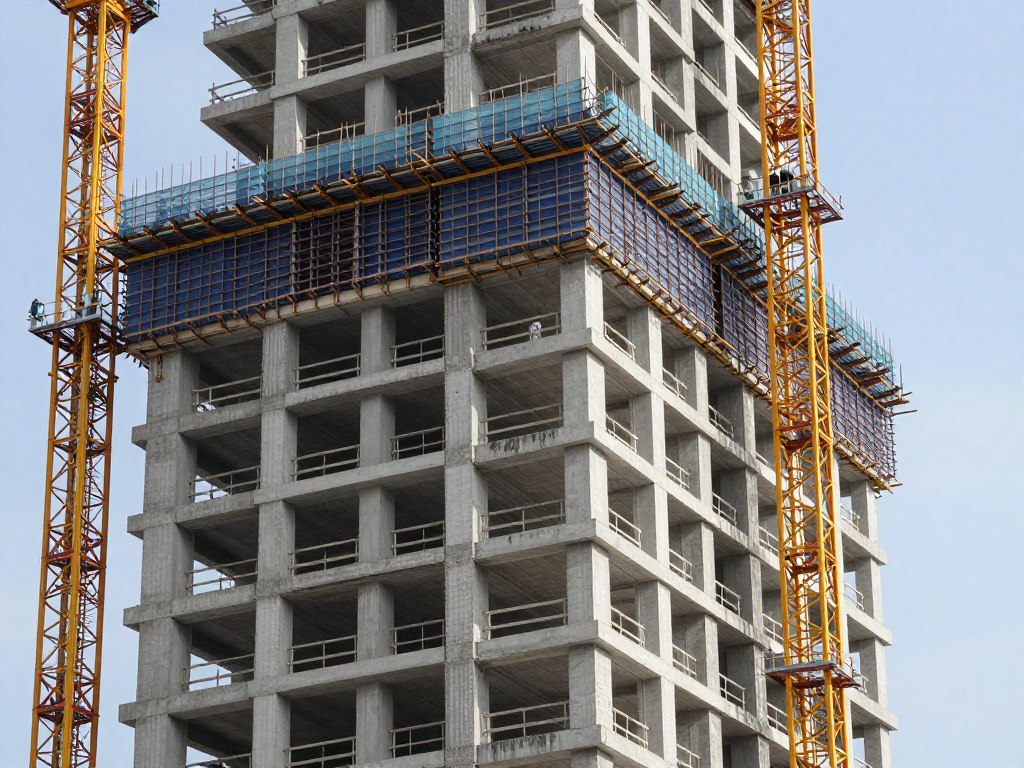
A structural contractor benchmarked PAC® Premium Black vs. traditional plywood on a 12-story commercial project (600 slab units over 18 months). PAC® boards completed 54 pours with zero surface defects; plywood batches required replacement at 4-pour intervals. Result: PAC® cost ₹52 per sq.m per cycle (including buyback adjustment); plywood cost ₹65+ per sq.m for single-use disposal. Downtime savings: 40 hours (no rework grinding). Material waste: zero vs. 23 tons of scrap plywood.
Cost-Per-Cycle ROI: 40% Buyback Advantage
PAC® Standard White costs ₹80/sq.ft. (₹2,560 per 8×4 sheet @ 40 kg). After 35 cycles, scrap value: 40% × ₹2,560 = ₹1,024 credit. Net cost per cycle: (₹2,560 − ₹1,024) ÷ 35 = ₹44/sq.ft. per cycle. Plywood at ₹60/sq.ft. × 4 cycles max = ₹240/sq.ft. total waste. PAC® breakeven: 2.7 cycles.
IS Code Compliance & Structural Safety
IS 456:2000 Section 10.1 mandates deflection limits of L/270 for flat slab soffit. PAC® boards achieve L/500+ under standard loads, exceeding code margins. STEDRANT lab certifications confirm zero dimensional instability (0.07% heat movement per ASTM D 204), preventing mid-pour slippage on steep formwork. Plywood warping at 0.8–1.2% under thermal cycling creates safety hazards on column forms.
Addressing the Core Objection: “Plywood Is Cheaper”
Yes—but only for the first pour. Low-cost plywood (~₹45/sq.ft.) delaminates after moisture ingress, forcing disposal at ₹15/sq.ft. scrap value. PAC® costs 77% more upfront but delivers 8–12× the reuse life and maintains buyback value. For a contractor executing 200 pours/year, PAC® saves ₹4,80,000 annually in material disposal, rework labor, and schedule delay penalties.
Technical Specifications: NABL-Certified Lab Data
All PAC® Shuttering Boards carry NABL accreditation from Choksi Laboratories and STEDRANT Technoclinic, validating compliance with IS 1734 (Plywood & Veneer) and IS 456 (Concrete Structures) performance criteria. Key certified properties include 22.0 N/mm² compressive strength, 11.89 N/mm² tensile strength, and 2,214 N nail holding power—ensuring flawless nailing and zero splitting during stripping cycles.
Buyback + Logistics Model
All new PAC® orders qualify for 40% scrap value adjustment against old boards. Dispatch via TCI Freight or VRL Logistics within 7 days of 30% advance + 70% against LR. Net acquisition cost after three cycles drops to ₹1.45/sq.ft. per use, making PAC® the only rational choice for high-cycle formwork rental fleets and contractor cooperatives.
Conclusion
For high-cycle formwork projects, deflection, durability and reuse directly affect construction quality and overall project cost. PAC® Shuttering Boards are designed to provide consistent performance under repetitive concrete pours, while reducing concerns related to moisture, warping and frequent replacement.
With multiple reuse cycles, tested mechanical performance and a 40% buyback program, PAC® can help contractors and structural teams improve formwork efficiency and reduce long-term cost per use.
Choose formwork built for repeated performance—not repeated replacement.