


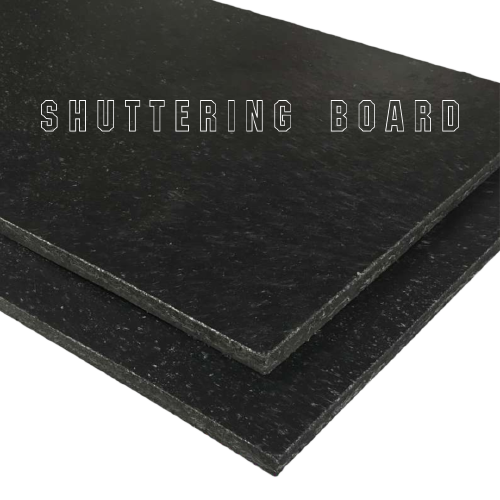
Should I choose a 12mm board or an 18mm board?
Many contractors simply buy the thicker board assuming it is always the better option. In reality, that’s not true.
The right Shuttering Board thickness depends on the type of structure you’re building, the concrete load, the formwork design, and how many times you plan to reuse the boards.
At Rajratan, we’ve worked with contractors, builders, and infrastructure projects across India. One thing we’ve learned is that choosing the correct board thickness not only improves construction quality but also helps reduce unnecessary material costs.
Let’s understand how to make the right choice.
Why Does Shuttering Board Thickness Matter?
During concrete casting, shuttering boards have one important job—they must support wet concrete until it gains enough strength.
If the board is thinner than required for the application, it may flex under load and affect the concrete finish.
On the other hand, choosing a thicker board for every project simply increases your investment without providing any real benefit.
Selecting the right thickness means:
- Better structural support
- Smooth concrete surface finish
- Easier handling on site
- Lower overall project cost
- Longer service life through multiple reuses
Why Does Shuttering Board Thickness Matter ?
During concrete casting, shuttering boards have one important job—they must support wet concrete until it gains enough strength.
If the board is thinner than required for the application, it may flex under load and affect the concrete finish.
On the other hand, choosing a thicker board for every project simply increases your investment without providing any real benefit.
Selecting the right thickness means:
- Better structural support
- Smooth concrete surface finish
- Easier handling on site
- Lower overall project cost
- Longer service life through multiple reuses
12 mm PAC® Shuttering Board – Best for General Construction
For most residential and commercial construction projects, a 12 mm PAC® Shuttering Board is the ideal choice.
It offers an excellent balance between strength, durability, and ease of handling.
Typical applications include:
- Concrete slabs
- Residential buildings
- Floor slabs
- Boundary walls
- General formwork
Since the board is lighter, workers can move and install it more easily, helping improve productivity on site.
Rajratan’s PAC® EcoPrime Standard boards are available in 12mm thickness and are designed to deliver 50 – 60 repetitions under proper handling and maintenance.
When Should You Choose an 18mm Shuttering Board?
Some construction projects demand extra rigidity and strength.
In such cases, an 18mm PAC® Shuttering Board becomes the better option.
It is commonly used for:
- RCC beams
- Heavy concrete slabs
- Large columns
- Retaining walls
- Infrastructure projects
- High-load formwork applications
The additional thickness provides better stiffness, helping maintain alignment during concrete pouring and vibration.
Rajratan manufactures 18mm PAC® boards in its ECOPRIME range for applications where additional strength and longer service life are required.
Why PAC® Boards Perform Better Than Traditional Plywood
Many builders still rely on plywood because it has been used for years.
However, plywood has one major limitation—it absorbs water.
Repeated exposure to moisture causes plywood to swell, bend, and lose its original strength. This often results in uneven concrete surfaces and frequent replacements.
PAC® Shuttering Boards are manufactured using a combination of industrial-grade plastics, aluminium oxide, fibres, and cross-linked polymers, giving them high strength, dimensional stability, and resistance to water.
Some key advantages include:
- 100% Waterproof
- UV Resistant
- No swelling
- No rotting
- Recyclable
- Smooth surface finish
- Longer service life
These features make PAC® boards a practical alternative to conventional plywood for repeated formwork applications.
12mm vs 18mm PAC® Shuttering Board
Feature | 12mm Board | 18mm Board |
|---|---|---|
Best For | Slabs, walls, residential projects | Beams, columns, heavy-duty structures |
Weight | Easier to handle | Heavier but stronger |
Flexibility | Good | Higher rigidity |
Applications | General construction | High-load concrete work |
Reusability | 30–40 repetitions* | 60+ repetitions* |
*Actual repetitions depend on site handling, shuttering oil usage, installation, and maintenance.
Tips to Get Maximum Life from Your Shuttering Boards
No matter which thickness you choose, proper handling makes a huge difference.
At Rajratan, we recommend:
- Apply shuttering oil before every concrete pour.
- Clean the boards after de-shuttering.
- Stack them on a flat surface.
- Avoid dropping boards on corners.
- Store them properly when not in use.
Following these simple practices helps increase the number of repetitions and keeps the surface finish consistent.
Which Thickness Should You Choose?
Here’s a simple guideline.
Choose 12mm PAC® Shuttering Board if your project involves:
- Residential buildings
- Standard floor slabs
- Small commercial construction
- Regular formwork work
Choose 18mm PAC® Shuttering Board if you’re working on:
- Heavy RCC structures
- Large beams
- Tall columns
- Industrial or infrastructure projects
- High-load concrete applications
If you’re unsure, it’s always better to discuss your project requirements with an experienced manufacturer instead of selecting thickness based only on price.
At Rajratan, we help customers choose the most suitable PAC® board based on their project needs, ensuring better performance and long-term value.
Conclusion
Choosing the right shuttering board thickness is not about selecting the thickest board available—it’s about selecting the right board for the right application.
A 12mm board is more than enough for most standard slab work, while 18mm boards provide additional strength for demanding structural applications.
With PAC® Shuttering Boards from Rajratan, you also benefit from waterproof performance, smooth concrete finish, longer service life, and multiple reuses, making them a reliable solution for modern construction projects.

